Showing posts with label identity. Show all posts

Friday, 5 May 2017

Home

When you shift houses, cities, schools a few times, you come to realize that home is not really a place. You get attached to a place because you attach memories to a place and you get attached to the memories - probably why most of us consider our childhood home special, something of a sanctum.

I love the place I grew up in, but it is a book, not a place, that is the repository of my childhood. Like with people, you can fall in love more than once but you will only ever have one first love.
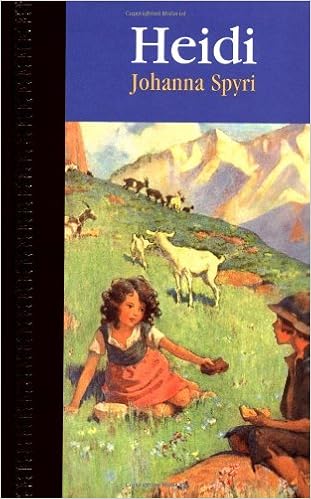

My first true love was Johanna Spyri's Heidi. I was six or seven when I read it first; I loved it so much that I engraved my name on the front page in childish cursive, declaring that 'this book belongs to Mahathi (7 yrs 8 yrs age). I've read it so many times since that I'm not sure I can distinguish the first experience from the rest. Reading is so integral a part of my life that my immersion in Heidi feels like the dawning of consciousness.

I was drawn inexorably to Spyri's Switzerland, to her goat's cheese, rustling fir trees and fiery sunsets. It sounded like heaven on earth - perhaps it was hers, and the vision she conjured was so captivating that I fell in love with a place I'd never been to; an experience I would only have again with L.M. Montgomery's Prince Edward Island.

In this veritable heaven, Spyri creates one of the most beautiful portraits of childhood and one of the most moving evocations of innocence I've ever read. It's very easy to empathize with Heidi, and it seems apt somehow that this book that feels like home captures so perfectly the feeling of acute homesickness.

I first felt the pangs of homesickness when I failed to be absorbed by Heidi - for the first time. A lot of people have a favourite toy or a favourite blanket: I had Heidi. I read it whenever I was bored, sad, angry, happy - all the time, really. Sometimes three or four times a year. Heidi was my pal. Her comforting presence looms large throughout my childhood.

I was one of those kids who was always sure of her footing. I knew who I was, I knew what I liked, and I very emphatically knew what was right and what was wrong. Teenage put an end to certainty and opened up a world of grey. I've written about it before; in my first post for this blog, in fact.

For a year or two, I didn't read Heidi. Then suddenly, one day, it all felt like too much, and I wanted my old friend. I was fourteen. So I opened my trusty brown hardcover and began to read; only, this time, it didn't do the trick. I couldn't escape. I couldn't hear the magical sound of the wind rushing through the fir trees, couldn't feel Heidi's wonder when the sun set fire to the mountains; suddenly it was horribly clear to me that I was simply looking at ink blots on a page.

That is a moment I will never forget. For me, the death knells of childhood began to ring right then. From that day to this, I haven't read Heidi completely again. That didn't stop me from carrying her with me to the US when I went to college, and it didn't stop me from feeling as if I'd lost a very dear friend or maybe even an appendage when the airline lost my baggage the beginning of sophomore year; but it was a paradise to which I'd lost the key.

There were many, many days when I woke up and wished I could just be a child again. That I could see again with unclouded eyes and undimmed hope the many horizons I'd sketched, over and over again. I longed to enter that oldest and dearest landscape once more, but I was horribly afraid I would see those inkblots again.

In February, I tracked down the same edition I'd had on Amazon and ordered it for an extravagant sum. You see, it had to be the very exact same copy.

When it came, I looked at it in wonder. It was the same, but they had added colour plates to the book. So it had my beloved illustrations, and the same translation, as well as colour paintings by the illustrator.

I thought this time I was ready. I thought when it came that for a few hours it would be just me and Heidi, that we'd find our old rhythm again.

But somehow it was enough to just look and hold, to caress the spine and run my fingers over those beautiful, vivid, full-colour illustrations. I found, when I turned to the first page, that the words were as familiar to me as my reflection. They had become a part of me.

Monday, 1 May 2017

Will I ever be anything other than sporadic Part II

Sorry, I just like sloths.

Do I lack all discipline? Am I in a rut? Does time hold no meaning for me?

Who knows. When you lack courage and conviction in yourself and your work, it can be a destructive cycle.

Don't get me wrong. I know my strengths, and I think I am a reasonably confident person - most of the time. But when it comes to writing, my mind can exploit insecurities and fears I didn't even know I had. Add to that compulsive perfectionist tendencies, and you have sadly abbreviated, sporadic - there's that word again - and incomplete output.

I'm a smart person. I know that the remedy for this problem is to write nevertheless and write as much as possible. Eventually, I'll get the better of my old nemesis, Self-Doubt, for long enough to produce something worthwhile. It's a common enough problem among writers.

So why is it that I never write as much as I want to and know I should?

I've begun to realize that our lives can be self-fulfilling prophecies to a terrifying extent. There was a time when I unfailingly believed that I could do and be better. There was always a tomorrow. And while I believed that to be the case, there was always reason to keep striving. There was a future in which I wrote all the time, everyday, in which I was a creative, fulfilled person who was disciplined and fit and lived life on her own terms. I just knew it.

But when that tomorrow failed to materialize quickly enough for my impatient young self, some subconscious part of me began to believe that I was just fated to be one of those people who never live up to their potential (which also happens to be one of my biggest fears). As soon as I began to believe that, I gave myself permission to stop trying. Make no mistake, believing the worst of yourself can be a cop-out. It's a lazy, self-pitying way of saying I was born this way, so why bother? or Circumstances have made me who I am and I can't change that.

Until next time, dear readers. If all goes well, that should be sooner rather than later.

Monday, 8 June 2015

A Mass of Contradictions

I haven't written a poem spontaneously in years. So here is my rusty muscle:

Have you ever felt a searing pain?
                               a searing joy?
                               wistful and lonely?
                               plain and homely?
                               a rightful gladness?
                               overwhelming wrongness?
                               light and insane?
                               thoroughly sane?
                               flighty and reckless?
                               staid and weightless?
                               truly restless?
                               a beautiful mess?
                               an ugly mess?
                               an insatiable lust?
                               well and truly bust?
                               ridiculously complex?
                               a broken reflex?
Have you ever felt, felt, felt             I feel too much?
                                                         I think too much?
                                                         I am too much?
                                                         I shall combust?
                                                         What can contain me?
                                                         Who can contain me?
                                                         Will I be contained?
                                                         Should I be contained?
If I am not, shall I not bleed all over the ground?
If I am, shall I not destroy myself?
Then have you seen yourself in the mirror,
Looked at the sky,
Realized how insignificant you are and
Laughed it off?

Friday, 5 June 2015

What I want to be when I grow up

Now, this is a question that every Indian aunty in existence has asked me from birth, it feels like.

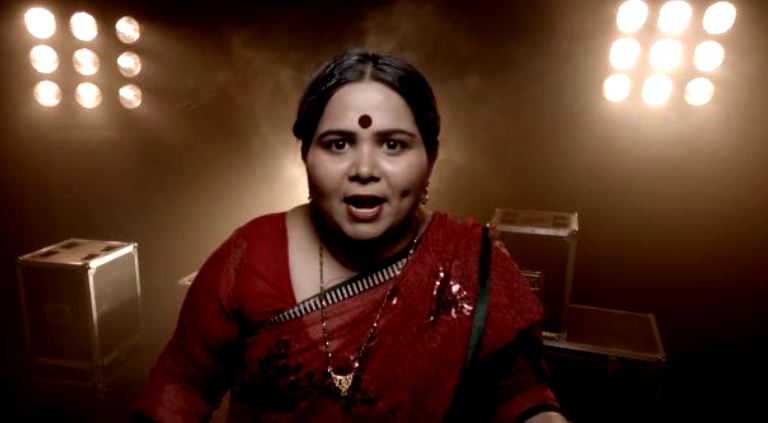
Anu aunty, source: India Times

Like every kid my ambition changed every week. In first grade, I wanted to be a scientist. In fourth grade, I wanted to be a writer by the time I reached the ripe old age of 30. By the time I was in the fifth grade, if you asked me what I wanted to be, I counted off the alternatives on my fingers: I wanted to be either:
1. A writer and/or
2. A singer and/or
3. An artist and/or...
I know I had five, but I can't remember the other two. At any rate, I was not in the least limited by societal or parental expectations, because I was lucky enough to have parents who hadn't instilled in me any expectations or ideas of a pre-determined path. In the seventh grade, when I was thirteen, an uncle I admired gave me Glimpses of World History by Jawaharlal Nehru.

This book changed my life.

Now, I know that it always seems exaggerated or improbably dramatic when someone famous claims that a single book irrevocably changed their life. I might have said before I read Glimpses that a number of books shaped me (Yes, this was the kind of thing I thought about when I imagined being interviewed after I became famous - I was just that narcissistic and adorably - or obnoxiously, depending on your point of view - certain that I was meant for big things).
The funny thing is that I never even read that book in its entirety. Not that it wasn't a good book; just that something always got in my way. The twenty or so pages that I read, however, led me to my most grandiose dream yet.

I was going to be a social activist.

I was so inspired by the poignancy and beauty of Nehru's writing (not to mention his impressively extensive knowledge of world history) and belief in his cause, that I decided on the spot that I wanted to work towards making my country the country that Nehru and others of his ilk had envisioned when they fought to be free of the British. This resolution and this dream satisfied me like no other had because it was huge. There was nothing huger than wanting to change the world. Than to go down besides giants like Mahatma Gandhi and Vallabhai Patel in history and the world's memory.

Since I studied in Prakriya Green Wisdom school at the time, an unusual experimental school (one of the six I went to between 1st and 12th grade), I knew what a 'social activist' was. I was also hilariously convinced that this was a profession in itself. I knew a little about Medha Patkar and the Narmada Bachao Andolan. This is what I based my decision on. From that day, I went around telling people that I wanted to be a social activist. My dreams got bigger and bigger until I felt like I was some kind of chosen, anointed Being destined to fix everything that was wrong with India.

Obviously, I was setting myself up for a fall. Such hubris does not go unpunished.

And therefore, I had to go through the torment of punishing myself over and over again for daring to dream. I had to suffer the worst of doubt, the worst of self-loathing. For years I could content myself neither with the prospect of a 'regular' job, nor with that of a 'creative' one. Either I felt capable of nothing at all, or everything. My old dream was impossible; stupid and childish; why, then, did no
'real' dream even come close to replacing it? Why couldn't I see past it?

Eventually, as I rebuilt myself and my ideals, I began to see that there was only one path for me. Sure, it sounded grand and delusional, but it was all or nothing for me. I was ready to throw everything away for a dream. But only such a dream as was worth risking everything for. I knew I wanted to change the world. I could see now that only visionaries, only those who deluded themselves with the strength of their visions, ultimately ended up the harbingers of change. To make a significant difference, you have to be able to see past what is to what could be, what should be.

You must have your feet on the ground but your head in the clouds.

So this is what I want to be. A decision maker. A policy maker. A titan on the world's stage, someone who is actively shaping history, hopefully for the better. Sure, sometimes I am attacked by fear and self-doubt, but in my heart of hearts I know that nothing less will do. This is to remind me of who I am, what I want, and what the stakes are, in those times when I regret sorely the decision not to be an engineer, a computer science major, or an IT whiz.

It hasn't been easy. Life is not a linear narrative like it is in the movies. Everything didn't magically smooth itself out the day I decided that this was my path. A montage was not all I needed. The doubts didn't disappear.

From the moment I chose to do 'commerce'/humanities/social science after 10th grade to the moment I decided to major in Economics and English, the doubtful aunties have authoritatively followed me, scoffing at my foolishness every step of the way. I topped my class and school in the 10th grade. Immediately, everyone wanted to know what I planned to do, which subjects I planned to take, and which IIT/medical coaching center I was intending on joining. My announcement - that I was not going to be doing either engineering or medicine - was met with shock and disapproval, as well as with - probably - What are her parents thinking?! Beti ko 99 aayi physics or chemistry mein or kehti hain ki engineering nahin karegi! (Not that I have anything against either engineering or medicine - both are amazing paths that have all my respect - they've just never been for me). Sometimes this was ok because they assumed I was going to do CA (Chartered Accountancy), another surefire path to success. I let them think that. Mostly I just say that I'm majoring in Economics, or even just 'Commerce', because:
1. I'm too lazy to explain
2. It's not going to make a difference
3. It's better not to waste time and effort on naysayers who are so convinced of the rightness of their position that nothing you say will make the slightest dent on their rock-firm convictions.

I topped my class again in the 12th grade, and again I was bombarded with the same questions. Again, I was reluctant to attempt the long and sure-to-be-rather-agonizing explanations. Again I brushed it off or prevaricated.

Now that I have finished two years of college and am closer to graduating, this no longer cuts it. People have begun to talk of internships and jobs. I can no longer afford to pretend that I'm going to follow in everyone else's footsteps. So, aunties, this is for you. Here's to you. Here's to hoping that you can open your mind and see where I'm coming from. Here's to hoping that you see that not everybody can push the responsibility for action and change on to somebody else, because somebody has to be that somebody else. I want to be that somebody else. I am willing to be that somebody else. I am that somebody else. No one asked me to fix the world, or even try, but I want to do it, anyway. I've always been a bit of a busybody and an inveterate meddler. I am very good with unsolicited advice, not unlike yourselves. Might as well put that to good use.

To finish off:
Anu Aunty - The Engineering Anthem

Thursday, 20 November 2014

Why do I wear a bindi?

Hello everybody,

I am sorry to report that I have fallen behind on NaNoWriMo (National Novel Writing Month). Very behind. I was getting along swimmingly until schoolwork caught up with me. Two exams in one week and I fell smack out of dreamworld and very firmly into this one. You might have heard that Buffalo is having some very heavy snow days, so I do have a chance to catch up now. The trouble is that I'm going to have to get back into the 'groove'. The 'mood'. You know, immerse myself back in the world of my novel until I can write in it convincingly again. I can't really catch up on NaNoWriMo anymore (seeing as I missed 12 days out of 30), but that was never really the point anyway. Now that I'm well on my way, I want to take it slow and just do my best. I don't intend to stop writing The Glass Slipper again, but I am going to go slower.

In the meanwhile, I interrupt this programming to bring you a cultural broadcast.

I wear a bindi - i.e. a little sticker-dot on my forehead that looks like this:
Disclaimer: This is not me. This is Deepika Padukone, a Bollywood actor.

Except that mine is usually even smaller, and I wear it with regular western clothes. And I'm nowhere near as good-looking, of course.

Since I grew up in a very cosmopolitan area in a large city, was educated in English-medium schools throughout my life, and belong to a relatively affluent urban class, this is a little unusual. Most of my friends don't wear a bindi unless there's a cultural or religious occasion they have to attend (sometimes not even then). So even in India, people asked me 'Why do you wear a bindi?' My answer was generally a simple 'I like wearing one' or 'I like how it looks on my face.' But since I've come to the US, the questions have increased  in frequency, and I try to give more sophisticated answers, because most of the time people here don't know what a bindi is or why (some) Indians wear it.

Do I know why we wear bindis? I know why I wear it. I have an idea of the religious/cultural significance, but that's really only partially the reason for me.

I didn't really grow up making sure I put a bindi on my face everyday. I did wear bindis, but it wasn't really something I felt a compulsion to do everyday or all the time. I started wearing bindis regularly in the 8th grade. As a confused, doubtful and angsty teenager, it was merely a desperate ploy to convince myself of a number of things: the world really is black-and-white; I am the same person I was two years ago; I believe wholeheartedly in religion and God; I love my country and its people; I understand and respect all the traditions I follow. It was a very personal thing - a display of pride in my culture and heritage, a pride and faith that I was trying to cultivate to replace the emptiness inside. I didn't really think that much about it; I was just trying to be religious in the best way I knew how, apart from praying. Everything was changing - I felt as if the ground was slipping away from under my feet - and my bindi was my foothold.

I have grown a lot - literally and figuratively - since then. As I have evolved, so has the meaning of my bindi, for me. In the past 5 or 6 years, putting on a bindi has become a habit for me. I don't really think about it anymore - I do it the same way I brush my teeth - automatically. But I do think about it, and sometimes I ask myself the question 'Why do I wear a bindi?'

There is of course the religious/cultural significance, which is why I originally began wearing it. 'Traditionally, the area between the eyebrows (where the bindi is placed) is said to be the sixth chakra, ajna, the seat of "concealed wisdom". The bindi is said to retain energy and strengthen concentration. The bindi also represents the third eye.' That explanation is a shameless cut-and-paste from Wikipedia. Do look up the rest of it, it's actually pretty interesting.

Then there is the significance it has taken on for me. As a student in the US, studying Economics and English, I sometimes feel torn between my passion and what is undoubtedly a good education, and the feeling that I'm moving further and further away from my Indian 'heritage.' Sometimes, when I'm reading Shakespeare, I feel ridiculous. Why on earth am I studying English literature when we have so much rich vernacular literature of our own that I should be exploring? Why am I not reading Kalidasa instead? Of course, even if I were to read Kalidasa, it would be in English, which would not be quite the same. Why don't I know Sanskrit? Why don't I know my 'mother tongue', Telugu, as well as I know English, for that matter? Is it not a rather sad thing that I'm far more comfortable with English?

I struggled a little before deciding that I wanted to major in English as well as Economics. Mostly because I wondered whether it was a pragmatic choice - but there was a tiny part of me that screamed 'traitor!' I eventually realized that it was foolish to deny my passion and love for language - even if it sometimes feels like the wrong language - just because I felt like I was becoming too 'Western'. What does that mean, anyway? And do the two (English/a 'western' education and my local heritage) have to be mutually exclusive?

My bindi is, for me, truth be told, a rather tenuous connection to home and all I associate with home. It is a way for me to feel rooted, and Indian. It is a proud declaration of who I am and how I am unique. I may be wearing jeans and a t-shirt, but I am not American. I like America, but I am not American. It is a way to assert the mish-mash of cultures, language and thought that make me who I am. I grew up on Austen and Rowling and Disney, but also on Carnatic music and Bharatnatyam and Bollywood. I am who I am, and I'm done being confused and ashamed. I'm allowed to love classical Indian music and dance and have an extensive knowledge of English literature at the same time. But of course, no one ever said I couldn't. I don't mind people seeing or even asking about my bindi, but I don't wear a bindi to prove something to other people. I wear it for me, for how comforting it feels to touch the dot on my forehead and be instantly reminded of home, and the colour and chaos that made me the colourful and chaotic person I am today. My bindi is a part of me now, and the pride that I was attempting to simulate all those years ago is very real today.

Monday, 19 May 2014

Stepping into adulthood: the end of freshman year


Forgive me the pretentious post title, but that is exactly how it feels - as if by living somewhat independently for the past year, I have started to grow up. I feel like a vastly different person from the high school graduate a year ago - although surely one doesn't change so much in the space of one year?

My outlook has tempered a little since my breathlessly excited post last August, but I still love college. I feel as if I'm slowly coming into my own, and gaining confidence in my abilities. I feel free and happy in college. Classes, homework and tests feel far less like millstones around my neck. I've at least partially achieved what I never could in IB - the balanced perspective that tells me that a failed exam or an unfinished project would hardly be the end of the world. I perform far better without the immense pressure of the critical voice in my head asking stupid what-if questions. I've decided I take life far too seriously - and ironically, I've found that when I keep that in mind, I become closer to the person I want to be than when I let it eat at me that I'm some distance from who I want to be. One of my teachers gave me this quote when I was leaving school: You're braver than you believe, stronger than you seem, and smarter than you think. (AA Milne, Winnie the Pooh - and thank you, Deepa ma'am!) I'm starting to believe it.

Spring semester was a lot busier for me than fall semester. But I didn't mind, because most of my classes have been very interesting, and I've had some really good professors this year. My 'Intro to writing poetry and prose fiction' class was a blast. I've really enjoyed it, even if I have realized that writing poetry is not for me. Professor McCaffrey is a sweetheart, and his generous reception made it far easier to let go of my writing inhibitions, of which I have plenty. World Civ class reminded me how much I used to love history before I dropped it in IGCSE and IB. I might have been a little happier in IB if I'd taken history instead of business, but it's a moot point now. Reading primary and secondary documents from different periods of history and researching the Renaissance for my project have been fascinating.

Calculus has been a bit of mixed bag. The professor (Robert Busch) had quite the personality - not only is he a really good teacher, but he is also extremely engaging, and very, very funny. He is probably the funniest teacher I've ever had. Some of this stems from the fact that he isn't hesitant about doing outrageous things - like smearing chalk powder on his forehead and cheeks and shouting at the board (a war cry, see, before tackling calc).
But I did terribly on one exam when I relaxed a bit too much, and I still haven't gotten over it. Also, the realization that I will never quite be a math genius even if I do like math, pinches a little.

Geography of Economic Systems was super easy to get through - but still quite interesting. The professor, Deborah Naybor has an amazing story (check out http://www.capitalistchicks.com/?q=node/347 and http://www.averagegirlmagazine.com/members/Archive/0504Inspiration01.pdf). She is also extremely sweet, and I seriously considered going to Uganda with her this summer. It didn't work out, unfortunately, but I'm hoping I can go next year.

So I've had a wonderful but busy semester and I'm totally ready for summer. Being home is strange, though. When I came home for winter break, it felt as if the four preceding months had been a trip and I was home for good. Now, being home feels temporary. I suppose it's a sign that I've acclimated to living on my own and university, but I'm struggling with it a little. The more I get used to living in the US, the more I feel irrationally frightened that I'm becoming somehow less Indian. This has always been a struggle for me. I feel strongly rooted yet alienated because of how Western my outlook is. Even before I went to the US it was like this - after all, my consumption of books, movies, everything - is predominated by the West. Some days I would feel suddenly ashamed of how I think and express myself in English - it would feel wrong, somehow, that the language I'm most comfortable with is English and not Telugu. There is this niggling fear in the back of my head that the longer I stay and study in the US, the more Americanized I will become. Don't get me wrong - there are a lot of wonderful things about Western thought and culture - but I cherish my cultural heritage. I've resolved to start reading far more Indian authors this summer - and not just those who write in English (I mean translated regional literature). I want desperately to learn Sanskrit, and hopefully I'll find an online course that will allow me to do so. After watching the classic Missamma last winter, I want to watch a lot more black-and-white Telugu cinema. I also want to volunteer, and find an internship. I might never have managed to do all I planned to do in the summer before, but I'm always optimistic.

Most of all, it's scrumdiddlyumptious and gloriumptious to be home.


Monday, 16 April 2012

Post#1

This is my very first blog post. I created a blog a while ago, but somehow never followed it up. I have an exam tomorrow, but I'm bored, and a little over-confident, and I suddenly remembered this blog. I thought I'd go out for a walk, but none of my friends are around; so I thought: why not have a go?
I don't know how many people are this way, or would admit to being this way, but I am often a very confused soul. Until upto about 13 years of age, I was rock-sure about everything:opinions, convictions, beliefs, myself. Then, half a year or so into my teens, my world seemed to turn upside down. People speak of teenage as an exciting, fun age: to me it seemed like one, huge, confusing mess. I seemed suddenly thrust into a semi-adult world, where I realized how little I really knew. Nothing was black and white anymore; the world seemed painted in shades of grey. I was questioning things I'd never doubted before: the goodness of the world, my identity, my faith. As I began to try to gain more knowledge of the 'real world', I only grew more confused. The plethora of information and opinions 'out there' for all to see gave me headaches.
Some years have passed, and I've grown a little, I hope. But the conclusions I've drawn have been tentative, hesitant; so very unlike the firm, nearly bigoted conclusions I had before. I've come to terms with the fact that there are things I might never be sure about. And I've to come to realize that it's alright, completely acceptable, even, to not be able to pass a solid judgment on everything. But consciously or unconsciously, I still search for answers, for closure. I suppose that it's human nature to want to either be on top of everything, or to appear so.
Some days I'm absolutely sure I'll be lost forever, that I'll end up accomplishing nothing, really. On others, I dare to hope and dream that I'll make a difference to the world; even if it's only a drop in the ocean.