Showing posts with label growing up. Show all posts

Friday, 5 May 2017

Home

When you shift houses, cities, schools a few times, you come to realize that home is not really a place. You get attached to a place because you attach memories to a place and you get attached to the memories - probably why most of us consider our childhood home special, something of a sanctum.

I love the place I grew up in, but it is a book, not a place, that is the repository of my childhood. Like with people, you can fall in love more than once but you will only ever have one first love.
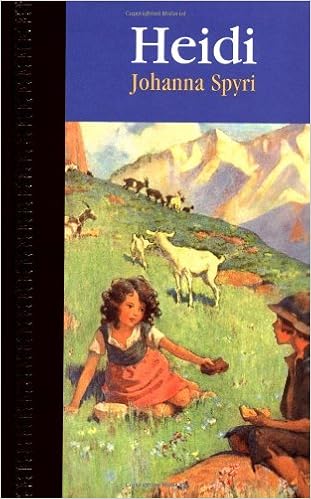

My first true love was Johanna Spyri's Heidi. I was six or seven when I read it first; I loved it so much that I engraved my name on the front page in childish cursive, declaring that 'this book belongs to Mahathi (7 yrs 8 yrs age). I've read it so many times since that I'm not sure I can distinguish the first experience from the rest. Reading is so integral a part of my life that my immersion in Heidi feels like the dawning of consciousness.

I was drawn inexorably to Spyri's Switzerland, to her goat's cheese, rustling fir trees and fiery sunsets. It sounded like heaven on earth - perhaps it was hers, and the vision she conjured was so captivating that I fell in love with a place I'd never been to; an experience I would only have again with L.M. Montgomery's Prince Edward Island.

In this veritable heaven, Spyri creates one of the most beautiful portraits of childhood and one of the most moving evocations of innocence I've ever read. It's very easy to empathize with Heidi, and it seems apt somehow that this book that feels like home captures so perfectly the feeling of acute homesickness.

I first felt the pangs of homesickness when I failed to be absorbed by Heidi - for the first time. A lot of people have a favourite toy or a favourite blanket: I had Heidi. I read it whenever I was bored, sad, angry, happy - all the time, really. Sometimes three or four times a year. Heidi was my pal. Her comforting presence looms large throughout my childhood.

I was one of those kids who was always sure of her footing. I knew who I was, I knew what I liked, and I very emphatically knew what was right and what was wrong. Teenage put an end to certainty and opened up a world of grey. I've written about it before; in my first post for this blog, in fact.

For a year or two, I didn't read Heidi. Then suddenly, one day, it all felt like too much, and I wanted my old friend. I was fourteen. So I opened my trusty brown hardcover and began to read; only, this time, it didn't do the trick. I couldn't escape. I couldn't hear the magical sound of the wind rushing through the fir trees, couldn't feel Heidi's wonder when the sun set fire to the mountains; suddenly it was horribly clear to me that I was simply looking at ink blots on a page.

That is a moment I will never forget. For me, the death knells of childhood began to ring right then. From that day to this, I haven't read Heidi completely again. That didn't stop me from carrying her with me to the US when I went to college, and it didn't stop me from feeling as if I'd lost a very dear friend or maybe even an appendage when the airline lost my baggage the beginning of sophomore year; but it was a paradise to which I'd lost the key.

There were many, many days when I woke up and wished I could just be a child again. That I could see again with unclouded eyes and undimmed hope the many horizons I'd sketched, over and over again. I longed to enter that oldest and dearest landscape once more, but I was horribly afraid I would see those inkblots again.

In February, I tracked down the same edition I'd had on Amazon and ordered it for an extravagant sum. You see, it had to be the very exact same copy.

When it came, I looked at it in wonder. It was the same, but they had added colour plates to the book. So it had my beloved illustrations, and the same translation, as well as colour paintings by the illustrator.

I thought this time I was ready. I thought when it came that for a few hours it would be just me and Heidi, that we'd find our old rhythm again.

But somehow it was enough to just look and hold, to caress the spine and run my fingers over those beautiful, vivid, full-colour illustrations. I found, when I turned to the first page, that the words were as familiar to me as my reflection. They had become a part of me.

Monday, 1 May 2017

Will I ever be anything other than sporadic Part II

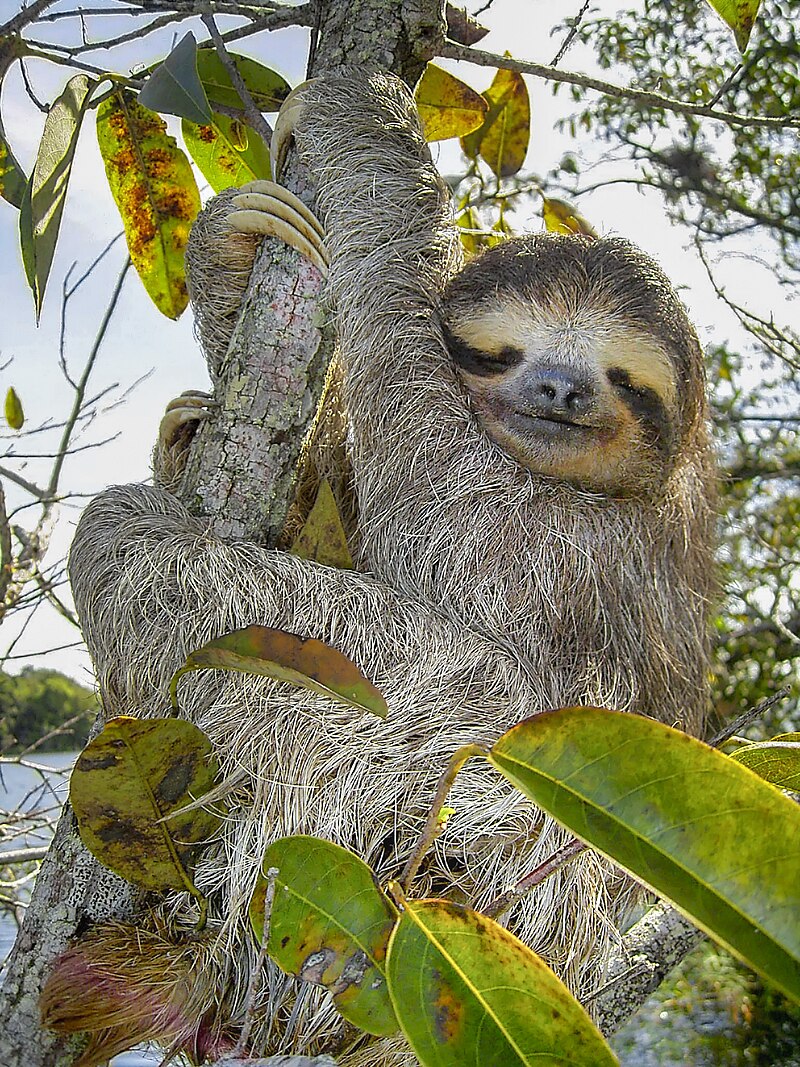
Sorry, I just like sloths.

Do I lack all discipline? Am I in a rut? Does time hold no meaning for me?

Who knows. When you lack courage and conviction in yourself and your work, it can be a destructive cycle.

Don't get me wrong. I know my strengths, and I think I am a reasonably confident person - most of the time. But when it comes to writing, my mind can exploit insecurities and fears I didn't even know I had. Add to that compulsive perfectionist tendencies, and you have sadly abbreviated, sporadic - there's that word again - and incomplete output.

I'm a smart person. I know that the remedy for this problem is to write nevertheless and write as much as possible. Eventually, I'll get the better of my old nemesis, Self-Doubt, for long enough to produce something worthwhile. It's a common enough problem among writers.

So why is it that I never write as much as I want to and know I should?

I've begun to realize that our lives can be self-fulfilling prophecies to a terrifying extent. There was a time when I unfailingly believed that I could do and be better. There was always a tomorrow. And while I believed that to be the case, there was always reason to keep striving. There was a future in which I wrote all the time, everyday, in which I was a creative, fulfilled person who was disciplined and fit and lived life on her own terms. I just knew it.

But when that tomorrow failed to materialize quickly enough for my impatient young self, some subconscious part of me began to believe that I was just fated to be one of those people who never live up to their potential (which also happens to be one of my biggest fears). As soon as I began to believe that, I gave myself permission to stop trying. Make no mistake, believing the worst of yourself can be a cop-out. It's a lazy, self-pitying way of saying I was born this way, so why bother? or Circumstances have made me who I am and I can't change that.

Until next time, dear readers. If all goes well, that should be sooner rather than later.

Saturday, 1 April 2017

Will I ever be anything other than sporadic?

Sloth. You'll see why.

It's hard to know where to begin when it's been four months since my last, enigmatic post. Especially when those four months encompass a wide variety of experiences, and my first few months of having a full-time job.

Shall I summarize as I used to attempt to do after long gaps? Shall I go for a meandering, indulgent stream-of-consciousness type excess?

If at all you have observed this blog over the years, do you notice the pitch to which I've perfected evasive techniques even in writing?

I'd mentioned my feelings about the uncertainty of adulthood and a life without the safe restrictions of academic life. Freedom, it seemed, was not always an unqualified gift; without clear purpose, it can mean an aimless, empty wandering that leaves you with a feeling of ennui.

I wish I could say that I remained as sprightly as I was in that post made a month after graduation, and went at my future with gusto. Truth is, though, that I was unprepared and felt unmoored. For a few months I succeeded in suppressing the fear and insecurities that lurked beneath the surface and sometimes even managed to let go and enjoy the freedom of having nothing to do. I read like crazy, as I hadn't done in a long time, and I loved it; being able to read like that again made me feel as if I could breathe more freely. I recognize that people have other passions that give them the same sense of relief and solace; for me, nothing else will ever give me quite the feeling of being understood. Perhaps this need to bury oneself in a pursuit is the hallmark of a lonely introvert who remained sometimes ungratefully lonely despite having many wonderful friends.

How do I describe that loneliness? It's not a loneliness that comes from lacking company; it's a loneliness that comes from not possessing in adequate measure (yet) the skills to express those difficult thoughts, those complicated emotions, those delicate and complex ideas built so carefully in the hours of reflection I cannot do without. It comes from not being able to share an entire inner world, and so, inhabiting it alone.

I digress. I read; I met friends and had some lovely times; I attended the wedding of a close friend (which is when the reality of adulthood actually began to set in).

At this juncture, I have to admit that I was enjoying myself too much to actually want to find something to occupy my time perforce. I couldn't help wishing that I could have my time to myself for a while longer, to do with as I wished, and to recover from some of the stresses I had put myself through as a student for so many years.

Since I have people looking out for me, who - not without reason - were afraid that I could spend any amount of time this way, I eventually felt obliged to put more effort into determining my immediate future. Again, I have to admit - not without shame - that I went about this task quite reluctantly, even grudgingly. The perfect student and model daughter was suddenly feeling a little rebellious, and not a little horrified at the mundaneness of the jobs that seemed available to someone as entirely clueless as I was about my next steps.

At this juncture, you might be wondering: what happened to the girl who grandly declared that she wanted to make a difference, that she wasn't interested in the humdrum rut of a corporate 9-5 existence?

I was wondering that myself. At the ripe old age of 21, I was feeling washed out. My deepest of convictions were wavering under the onslaught of reality - by which I mean that I had lost faith in myself and consequently failed to hold myself up to the standards of my younger self. It's not that I took some inconsequential job that would have added nothing of value to my life - it's that I had ceased to look before I had even begun, and that I had concluded absurdly prematurely that I wasn't good enough for what I really wanted to do.

The stars, though, have always been on my side. Through a friend, I came to know of a young microfinance company named Vaya. I perceived with mild interest that this would be a great opportunity to find out more about microfinance and its practical applications. In my IB years, I had written my 4000-word research project on microfinance, and it remained a subject of interest.

Interviews are not my strong suit. I have the odd good day on which I feel confident and articulate, but most of the time, my brain seems to separate itself from my body and I just end up feeling incredibly foolish. Not to mention my idiotic need to downplay my achievements, in this age of self-marketing, where more is more. When somebody says I've done good work, my first instinct is to say, 'it could have been better,' or to excuse myself on the grounds that I was younger and didn't know much, or some such nonsense, as I've I'm expecting disapproval and haven't yet registered the fact that what I received instead was approbation. Ever heard of the Impostor Syndrome?

I'm working on it. Anyway, I went for my interview, which somehow managed to stretch out over two days because the office happened to be shifting location and everyone was busy. Eventually I had an offer, and I accepted.

Stay tuned to find out what happened next. 😉

Sunday, 13 November 2016

Liberation

Not the greatest poetry perhaps, but straight from the heart:

Liberation

Free spirit
Bohemian
You cannot be confined
You must not be
Why then do you try
To cast yourself in a mold
So utterly foreign
To your deepest nature?
You will never be
One of them
You will never own
The same stripes.
One cannot change
One's very soul.
You were born to be free
To speak with the sun and the moon and the stars
Step lightly in the river
Converse with the wind
Pontificate with fire
Rest with the earth
To be at ease entirely
With the foliage that reaches for the sky
And the green folks that reside within.
To hear the bugle call
Of another universe
Entirely of your own making
And yet already alive
Your sirens, my dear, they will not be ignored.
Your muses, too many to be numbered,
Will not be quieted.
The itch in your fingers, in your bones,
Will not be denied.
How much longer will you run?
How much further?
Where will you escape to?
A forsaken place where poetry holds no meaning?
Where prose is so prosaic as to be utterly functional?
Where art is a by-the-by, only seldom indulged in to aimlessly pass the hours?
Will you thus wrong your body and soul?
Can you not see how blessed one is who can see beyond the mortal, the physical, the human?
Foolish, blind soul, return to your native hearth.
Accept thy name so presciently bestowed
And refuse to cave to dreary familiarity
                                      safe practicality
                                    pragmatic reality
                                       lacklustre duty
For you have a duty to yourself, bright being,
To not let the light die from your heart.
To keep alive the poetry that resides there
Despite your best attempts to squash it.
And to nurture the music, ever-present
As a note, a melody, an instrument, a song.
Paint those vistas only you can see.
You, my dear, do wrong yourself when you suggest
That such gifts are less bountiful
Than the worldly knowledge and political acumen you seek.
In seeking to know human pain and love and joy
You, my dear, perform one of the highest functions available to a human being.
Proudly deploy all that has been given to you
For there is only one of you
And one day the world shall hear
Of the unbearable sweetness that plagues you.

Thursday, 30 June 2016

The Return of the Prodigal Blogger, now a B.A. in Economics

Me and my dad, who has given me every opportunity and allowed me to diverge from the beaten path. Love you, Nanna. Notice the spectacles in my right hand.

      Since my slightly premature birth, this is the first time I've ever been early for anything. I'm that friend everyone has who has no conception of time. This very post is more than a month late. It's not that I ever intend to be late to anything, and I'm an eternal optimist. It is just the way of things. Fate.

However, when I do something, I evidently do it in style. So I graduated an entire year early, much to my own shock. I lived in denial for a few months, coming up with dozens of alternate plans that involved me staying in college longer. Ultimately, the prospect of not being a student after fifteen years (not even counting my Montessori days) was too tempting. Deciding to switch from my Honors English major to an English minor was considerably harder, but the right decision for me. Donning that gown a year earlier than my fellow juniors was strange - it was rather lonely on that stage. Apart from my family being there, the whole ceremony was rather underwhelming. There was no grand commencement speech, no 'this is it' moment. I even nodded off during one of the speeches after the stress of finals week.

But just like college is more than the sum of its academic parts, graduation is more than the ceremony and certificate. It's a huge milestone.

Graduation means facing a world without timetables, exams, classes - without an overarching structure to fall into - for the first time since we were three or four years old. This love-hate relationship with the restrictions of academic life turns into alarm at the sudden liberation from mandates. Unless you plan to go directly to graduate school (I don't), the freedom that seemed so delightful when paper deadlines were looming suddenly becomes rather threatening. What am I if not a student?

It's time to find out.

Stay tuned to this space for more.

Monday, 8 June 2015

A Mass of Contradictions

I haven't written a poem spontaneously in years. So here is my rusty muscle:

Have you ever felt a searing pain?
                               a searing joy?
                               wistful and lonely?
                               plain and homely?
                               a rightful gladness?
                               overwhelming wrongness?
                               light and insane?
                               thoroughly sane?
                               flighty and reckless?
                               staid and weightless?
                               truly restless?
                               a beautiful mess?
                               an ugly mess?
                               an insatiable lust?
                               well and truly bust?
                               ridiculously complex?
                               a broken reflex?
Have you ever felt, felt, felt             I feel too much?
                                                         I think too much?
                                                         I am too much?
                                                         I shall combust?
                                                         What can contain me?
                                                         Who can contain me?
                                                         Will I be contained?
                                                         Should I be contained?
If I am not, shall I not bleed all over the ground?
If I am, shall I not destroy myself?
Then have you seen yourself in the mirror,
Looked at the sky,
Realized how insignificant you are and
Laughed it off?

Friday, 5 June 2015

What I want to be when I grow up

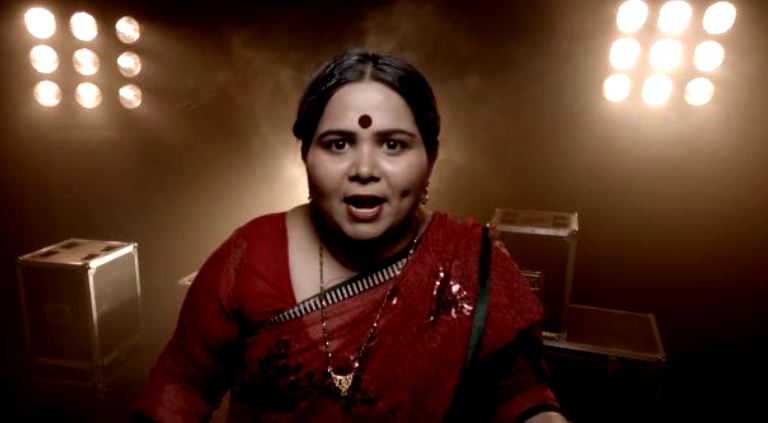
Now, this is a question that every Indian aunty in existence has asked me from birth, it feels like.

Anu aunty, source: India Times

Like every kid my ambition changed every week. In first grade, I wanted to be a scientist. In fourth grade, I wanted to be a writer by the time I reached the ripe old age of 30. By the time I was in the fifth grade, if you asked me what I wanted to be, I counted off the alternatives on my fingers: I wanted to be either:
1. A writer and/or
2. A singer and/or
3. An artist and/or...
I know I had five, but I can't remember the other two. At any rate, I was not in the least limited by societal or parental expectations, because I was lucky enough to have parents who hadn't instilled in me any expectations or ideas of a pre-determined path. In the seventh grade, when I was thirteen, an uncle I admired gave me Glimpses of World History by Jawaharlal Nehru.

This book changed my life.

Now, I know that it always seems exaggerated or improbably dramatic when someone famous claims that a single book irrevocably changed their life. I might have said before I read Glimpses that a number of books shaped me (Yes, this was the kind of thing I thought about when I imagined being interviewed after I became famous - I was just that narcissistic and adorably - or obnoxiously, depending on your point of view - certain that I was meant for big things).
The funny thing is that I never even read that book in its entirety. Not that it wasn't a good book; just that something always got in my way. The twenty or so pages that I read, however, led me to my most grandiose dream yet.

I was going to be a social activist.

I was so inspired by the poignancy and beauty of Nehru's writing (not to mention his impressively extensive knowledge of world history) and belief in his cause, that I decided on the spot that I wanted to work towards making my country the country that Nehru and others of his ilk had envisioned when they fought to be free of the British. This resolution and this dream satisfied me like no other had because it was huge. There was nothing huger than wanting to change the world. Than to go down besides giants like Mahatma Gandhi and Vallabhai Patel in history and the world's memory.

Since I studied in Prakriya Green Wisdom school at the time, an unusual experimental school (one of the six I went to between 1st and 12th grade), I knew what a 'social activist' was. I was also hilariously convinced that this was a profession in itself. I knew a little about Medha Patkar and the Narmada Bachao Andolan. This is what I based my decision on. From that day, I went around telling people that I wanted to be a social activist. My dreams got bigger and bigger until I felt like I was some kind of chosen, anointed Being destined to fix everything that was wrong with India.

Obviously, I was setting myself up for a fall. Such hubris does not go unpunished.

And therefore, I had to go through the torment of punishing myself over and over again for daring to dream. I had to suffer the worst of doubt, the worst of self-loathing. For years I could content myself neither with the prospect of a 'regular' job, nor with that of a 'creative' one. Either I felt capable of nothing at all, or everything. My old dream was impossible; stupid and childish; why, then, did no
'real' dream even come close to replacing it? Why couldn't I see past it?

Eventually, as I rebuilt myself and my ideals, I began to see that there was only one path for me. Sure, it sounded grand and delusional, but it was all or nothing for me. I was ready to throw everything away for a dream. But only such a dream as was worth risking everything for. I knew I wanted to change the world. I could see now that only visionaries, only those who deluded themselves with the strength of their visions, ultimately ended up the harbingers of change. To make a significant difference, you have to be able to see past what is to what could be, what should be.

You must have your feet on the ground but your head in the clouds.

So this is what I want to be. A decision maker. A policy maker. A titan on the world's stage, someone who is actively shaping history, hopefully for the better. Sure, sometimes I am attacked by fear and self-doubt, but in my heart of hearts I know that nothing less will do. This is to remind me of who I am, what I want, and what the stakes are, in those times when I regret sorely the decision not to be an engineer, a computer science major, or an IT whiz.

It hasn't been easy. Life is not a linear narrative like it is in the movies. Everything didn't magically smooth itself out the day I decided that this was my path. A montage was not all I needed. The doubts didn't disappear.

From the moment I chose to do 'commerce'/humanities/social science after 10th grade to the moment I decided to major in Economics and English, the doubtful aunties have authoritatively followed me, scoffing at my foolishness every step of the way. I topped my class and school in the 10th grade. Immediately, everyone wanted to know what I planned to do, which subjects I planned to take, and which IIT/medical coaching center I was intending on joining. My announcement - that I was not going to be doing either engineering or medicine - was met with shock and disapproval, as well as with - probably - What are her parents thinking?! Beti ko 99 aayi physics or chemistry mein or kehti hain ki engineering nahin karegi! (Not that I have anything against either engineering or medicine - both are amazing paths that have all my respect - they've just never been for me). Sometimes this was ok because they assumed I was going to do CA (Chartered Accountancy), another surefire path to success. I let them think that. Mostly I just say that I'm majoring in Economics, or even just 'Commerce', because:
1. I'm too lazy to explain
2. It's not going to make a difference
3. It's better not to waste time and effort on naysayers who are so convinced of the rightness of their position that nothing you say will make the slightest dent on their rock-firm convictions.

I topped my class again in the 12th grade, and again I was bombarded with the same questions. Again, I was reluctant to attempt the long and sure-to-be-rather-agonizing explanations. Again I brushed it off or prevaricated.

Now that I have finished two years of college and am closer to graduating, this no longer cuts it. People have begun to talk of internships and jobs. I can no longer afford to pretend that I'm going to follow in everyone else's footsteps. So, aunties, this is for you. Here's to you. Here's to hoping that you can open your mind and see where I'm coming from. Here's to hoping that you see that not everybody can push the responsibility for action and change on to somebody else, because somebody has to be that somebody else. I want to be that somebody else. I am willing to be that somebody else. I am that somebody else. No one asked me to fix the world, or even try, but I want to do it, anyway. I've always been a bit of a busybody and an inveterate meddler. I am very good with unsolicited advice, not unlike yourselves. Might as well put that to good use.

To finish off:
Anu Aunty - The Engineering Anthem

Monday, 19 May 2014

Stepping into adulthood: the end of freshman year


Forgive me the pretentious post title, but that is exactly how it feels - as if by living somewhat independently for the past year, I have started to grow up. I feel like a vastly different person from the high school graduate a year ago - although surely one doesn't change so much in the space of one year?

My outlook has tempered a little since my breathlessly excited post last August, but I still love college. I feel as if I'm slowly coming into my own, and gaining confidence in my abilities. I feel free and happy in college. Classes, homework and tests feel far less like millstones around my neck. I've at least partially achieved what I never could in IB - the balanced perspective that tells me that a failed exam or an unfinished project would hardly be the end of the world. I perform far better without the immense pressure of the critical voice in my head asking stupid what-if questions. I've decided I take life far too seriously - and ironically, I've found that when I keep that in mind, I become closer to the person I want to be than when I let it eat at me that I'm some distance from who I want to be. One of my teachers gave me this quote when I was leaving school: You're braver than you believe, stronger than you seem, and smarter than you think. (AA Milne, Winnie the Pooh - and thank you, Deepa ma'am!) I'm starting to believe it.

Spring semester was a lot busier for me than fall semester. But I didn't mind, because most of my classes have been very interesting, and I've had some really good professors this year. My 'Intro to writing poetry and prose fiction' class was a blast. I've really enjoyed it, even if I have realized that writing poetry is not for me. Professor McCaffrey is a sweetheart, and his generous reception made it far easier to let go of my writing inhibitions, of which I have plenty. World Civ class reminded me how much I used to love history before I dropped it in IGCSE and IB. I might have been a little happier in IB if I'd taken history instead of business, but it's a moot point now. Reading primary and secondary documents from different periods of history and researching the Renaissance for my project have been fascinating.

Calculus has been a bit of mixed bag. The professor (Robert Busch) had quite the personality - not only is he a really good teacher, but he is also extremely engaging, and very, very funny. He is probably the funniest teacher I've ever had. Some of this stems from the fact that he isn't hesitant about doing outrageous things - like smearing chalk powder on his forehead and cheeks and shouting at the board (a war cry, see, before tackling calc).
But I did terribly on one exam when I relaxed a bit too much, and I still haven't gotten over it. Also, the realization that I will never quite be a math genius even if I do like math, pinches a little.

Geography of Economic Systems was super easy to get through - but still quite interesting. The professor, Deborah Naybor has an amazing story (check out http://www.capitalistchicks.com/?q=node/347 and http://www.averagegirlmagazine.com/members/Archive/0504Inspiration01.pdf). She is also extremely sweet, and I seriously considered going to Uganda with her this summer. It didn't work out, unfortunately, but I'm hoping I can go next year.

So I've had a wonderful but busy semester and I'm totally ready for summer. Being home is strange, though. When I came home for winter break, it felt as if the four preceding months had been a trip and I was home for good. Now, being home feels temporary. I suppose it's a sign that I've acclimated to living on my own and university, but I'm struggling with it a little. The more I get used to living in the US, the more I feel irrationally frightened that I'm becoming somehow less Indian. This has always been a struggle for me. I feel strongly rooted yet alienated because of how Western my outlook is. Even before I went to the US it was like this - after all, my consumption of books, movies, everything - is predominated by the West. Some days I would feel suddenly ashamed of how I think and express myself in English - it would feel wrong, somehow, that the language I'm most comfortable with is English and not Telugu. There is this niggling fear in the back of my head that the longer I stay and study in the US, the more Americanized I will become. Don't get me wrong - there are a lot of wonderful things about Western thought and culture - but I cherish my cultural heritage. I've resolved to start reading far more Indian authors this summer - and not just those who write in English (I mean translated regional literature). I want desperately to learn Sanskrit, and hopefully I'll find an online course that will allow me to do so. After watching the classic Missamma last winter, I want to watch a lot more black-and-white Telugu cinema. I also want to volunteer, and find an internship. I might never have managed to do all I planned to do in the summer before, but I'm always optimistic.

Most of all, it's scrumdiddlyumptious and gloriumptious to be home.


Saturday, 26 October 2013

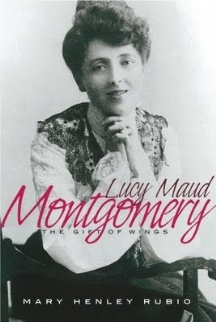
Lucy Maud Montgomery: The Gift of Wings

I've been deeply fascinated by L M Montgomery ever since I met Anne and her kin. I've loved many authors, but my fascination with 'Maud' runs much deeper - it feels like a personal connection. For nearly two years after Anne of Green Gables, my reading consisted almost solely of Montgomery's works. First the Anne series, then the Emily books, then The Blue Castle and A Tangled Web...

I'm not sure what it is about Montgomery that attracted me to her above all authors. The protagonists with whom I felt I had much in common? The feeling, loving creation of setting that has immortalized Prince Edward Island in the hearts of many ardent fans (including myself)? After I had read all the aforementioned books and some, plus some collections of short stories, I felt like I personally knew the author. With Montgomery, who uses similar themes in most, if not all her books, and who endows every protagonist with some of the same qualities (her characters are different, but they all possess imagination, intelligence, wit and generally a way with words), it is easy to feel as if she is sometimes talking about herself. It is easy to fancy that you know what she would have been like. To me, it was as if a 'kindred spirit' were talking to me from across time and space - I'd related to characters in books before, but never, never at the level at which I identified with Montgomery's protagonists. After a while though, it became less about the books and more about what I could find out about Montgomery by reading them. I became rabidly curious to find out more about the author who'd ruled my imagination for years. A preliminary google search revealed to me the news that Montgomery may have committed suicide.

This may not seem like much to you, but to a sensitive, over-imaginative girl, this was almost earth-shattering. I couldn't believe that this author - whose works contained so much joy, so much life - could even have a reason to take her own life. I retreated, in my mind, behind a defensive shield, refusing to believe that her life could have ended so tragically. As long as there was any shadow of a doubt, I resolved not to believe this. I also decided (thankfully) that I wasn't ready to read Montgomery's journals or any of the books written on her, yet. I would wait till I was less involved, more sensible and less sensitive.


When I received an Amazon gift card this August, I knew what I was going to use it for. Mary Henley Rubio's biography of Montgomery, of which I'd heard good things. I'm mature enough to handle this now, I thought. It's time to get some closure and put this obsession to rest.


The first part of the book, where Rubio is describing Montgomery's ancestry, wasn't very interesting. Once she got to her life, however, I couldn't put it down. I knew some of the things that Rubio describes, but not much. Maud was an extraordinary women, determined, disciplined, talented and extremely resilient.

The book did not give me much happiness, however. I'm not sure whether it was intended that way, but Maud's life comes across as tragic and full of disappointments, perhaps because the unhappy periods in Maud's life get far more attention and description. What is it about artists and men and women of genius that draws us to the flaws and unhappiness in their lives? When we remember Van Gogh, why do we simultaneously remember his art and his famously severed ear? Why is there so much emphasis on Virginia Woolf's suicide? Dante's exile? Dante and Beatrice? Do we get some sort of vindictive satisfaction in saying, "They may have been geniuses, but they didn't lead very happy lives"?

This emphasis on the tortured artist is something that has always troubled me. Is it mandatory for a great artist to die unhappy, melancholy and disenchanted with life?
What justice is there in a world in which people who provide so much happiness to others in the form of their work, are unhappy themselves?

Back to Maud - reading the book, you come across instance after instance of disappointment, of loneliness, of difficulty. The saddest parts of the book, for me, were where Maud fights depression. Her highs and lows resonated deeply with me, because I am the sort of person who can be exquisitely happy and tremendously sad.

But with what strength, what discipline Maud fights this! Rubio says she set aside a few hours for writing everyday, and she wrote, no matter what. If she felt burdened and couldn't write, she would copy texts or things she'd memorized, over and over again until she found inspiration.

From all accounts, she did face rather a lot of difficulties.

She supported herself through her higher education, with little support from a male-centric society, slaved away for a few years teaching and writing at the same time, developed terrible migraines, married a husband whose depressive fits worsened her own, took tablets that resulted in bromide poisoning, and had a terrible son who seemed to do anything that would break his mother's heart.

For all her resilience, for all that she fought, Maud dies exhausted and broken, referring to her life in her journal as 'hell, hell, hell.'

'My position is too awful to endure and nobody realizes it. What an end to a life in which I tried always to do my best in spite of many mistakes.'

Oh, Maud!

I read the last page, shut the book and wept. I wept for my idol, for this woman who'd done so much and felt so much; I wept out of sheer sympathy; I wept out of sorrow, out of fear that I'd end up the same way (I don't flatter myself with regards to talent, but as I've already said, her highs and lows resonated with me deeply). That night, I regretted reading this book, regretted my stupidity in thinking I was mature enough to handle this.

But when a few days had passed, and I was standing a little farther away from myself, I was able to look at things more rationally.

Most accounts of Montgomery's life naturally rely on her journals as a primary source, but for most of her adulthood, Maud wrote in her journals only of things that upset her, when she was at a breaking point, and situations were past endurance. Rubio tries to overcome this by talking to all kinds of people who knew her, including Montgomery's son Stuart (who was the good son; the disappointing one was Chester). She mentions the discrepancy between the troubled woman in Maud's journals, and the witty, sparkling, laughing women most of these people spoke of. Yet, troubled, tragic Maud gets more attention, perhaps understandably, considering that Maud may have ended her life.

But I think that joyous Maud deserves attention too. The woman who wrote of beautiful lands, fun times, raptures, soaring imagination and funny people deserves mention too. Who are we to say who Maud 'really' was? What if, underneath all the bad luck and sad circumstances, the 'real' Maud is the one we see in people's descriptions and in her protagonists? Busy, kind, witty, laughing, fun?

I've made peace with Maud's story. I refuse, however, to look at her as some sort of tragic heroine. There was tragedy in her life, but there was bliss too. I think she deserves to not have that glossed over. And despite whatever I said about the distress her story caused me, I think I have gotten that closure. I don't think I shall obsessively look for more biographies and analyses. I will let Maud rest in peace, reserving a spot in my heart for a wonderfully accomplished, resilient artist.

Monday, 16 April 2012

Post#1

This is my very first blog post. I created a blog a while ago, but somehow never followed it up. I have an exam tomorrow, but I'm bored, and a little over-confident, and I suddenly remembered this blog. I thought I'd go out for a walk, but none of my friends are around; so I thought: why not have a go?
I don't know how many people are this way, or would admit to being this way, but I am often a very confused soul. Until upto about 13 years of age, I was rock-sure about everything:opinions, convictions, beliefs, myself. Then, half a year or so into my teens, my world seemed to turn upside down. People speak of teenage as an exciting, fun age: to me it seemed like one, huge, confusing mess. I seemed suddenly thrust into a semi-adult world, where I realized how little I really knew. Nothing was black and white anymore; the world seemed painted in shades of grey. I was questioning things I'd never doubted before: the goodness of the world, my identity, my faith. As I began to try to gain more knowledge of the 'real world', I only grew more confused. The plethora of information and opinions 'out there' for all to see gave me headaches.
Some years have passed, and I've grown a little, I hope. But the conclusions I've drawn have been tentative, hesitant; so very unlike the firm, nearly bigoted conclusions I had before. I've come to terms with the fact that there are things I might never be sure about. And I've to come to realize that it's alright, completely acceptable, even, to not be able to pass a solid judgment on everything. But consciously or unconsciously, I still search for answers, for closure. I suppose that it's human nature to want to either be on top of everything, or to appear so.
Some days I'm absolutely sure I'll be lost forever, that I'll end up accomplishing nothing, really. On others, I dare to hope and dream that I'll make a difference to the world; even if it's only a drop in the ocean.