Thursday, 30 June 2016

The Return of the Prodigal Blogger, now a B.A. in Economics

Me and my dad, who has given me every opportunity and allowed me to diverge from the beaten path. Love you, Nanna. Notice the spectacles in my right hand.

      Since my slightly premature birth, this is the first time I've ever been early for anything. I'm that friend everyone has who has no conception of time. This very post is more than a month late. It's not that I ever intend to be late to anything, and I'm an eternal optimist. It is just the way of things. Fate.

However, when I do something, I evidently do it in style. So I graduated an entire year early, much to my own shock. I lived in denial for a few months, coming up with dozens of alternate plans that involved me staying in college longer. Ultimately, the prospect of not being a student after fifteen years (not even counting my Montessori days) was too tempting. Deciding to switch from my Honors English major to an English minor was considerably harder, but the right decision for me. Donning that gown a year earlier than my fellow juniors was strange - it was rather lonely on that stage. Apart from my family being there, the whole ceremony was rather underwhelming. There was no grand commencement speech, no 'this is it' moment. I even nodded off during one of the speeches after the stress of finals week.

But just like college is more than the sum of its academic parts, graduation is more than the ceremony and certificate. It's a huge milestone.

Graduation means facing a world without timetables, exams, classes - without an overarching structure to fall into - for the first time since we were three or four years old. This love-hate relationship with the restrictions of academic life turns into alarm at the sudden liberation from mandates. Unless you plan to go directly to graduate school (I don't), the freedom that seemed so delightful when paper deadlines were looming suddenly becomes rather threatening. What am I if not a student?

It's time to find out.

Stay tuned to this space for more.

Saturday, 12 September 2015

Argon Desaki's Report From Earth by Alan Walworth

Source: http://ecx.images-amazon.com/images/I/41H3yvUo7ZL._SX311_BO1,204,203,200_.jpg


In the interest of full disclosure, I proofread this book this summer and am proud to know its author. I have, however, tried to be as unbiased as possible.

           Argon Desaki’s Report from Earth defies easy categorization. It starts out as sci-fi, with an alien named Argon Desaki crash-landing on Earth. What follows is Desaki’s doctoral dissertation for ‘Stellar University’ in Pelonia, his home planet, on his findings regarding intelligent life on Earth. This is an effective plot device to describe our planet’s various issues from the point of view of an outsider. Desaki’s Report is a very strange book with an interesting and rather unique writing style that is often an asset but is sometimes a little distracting. Many of the book’s chapters are devoted to one or more issues related to the future of humanity, such as ignorance, apathy, wishful thinking, evolution, war, etc.
           
            I think the first few chapters could have flowed a bit better, and would have benefitted from a better structure. The author sometimes digresses from the plot into poetic or philosophical ruminations. Though many of these are interesting in content and style, I felt that they interrupted the action and were distracting, as in the case of ‘Wondering down a pleasanter pensive path, pursuing and perusing precious pastiches of times past, I recall our wonderful wandering before the crash…’ At first I was incredulous about this style of writing and the excessive use of alliteration, but I got used to it eventually and realized that it was intended to be humorous. There is also a lot of wordplay that is not always immediately obvious. For instance: ‘To tell you the truth, in my opinion people who think it makes sense to pay to hear what psychiatrists say have something wrong with their heads.’ My immediate response to this was to take offense, until I got the joke. I thought such double entendres were genuinely funny and enjoyed them.       

            For me the book really began to get interesting when Desaki started detailing his observations about the human race, even if I didn’t agree with all of them. Various important points were intriguingly presented, such as: ‘It took over a hundred thousand years for the Earthling population to first reach a billion in 1804. After that it took only 123 years to add the next billion. By 1987, adding another billion took only 12 years.’

            Many of Desaki’s opinions are controversial. For instance, he suggests that since it seems that people today can only afford one or two children as opposed to many more in earlier times, there has been a “serious decline in prosperity.” I think that the opposite is the case, as research shows that more highly educated individuals and more developed nations tend to have fewer children.

            Desaki’s views are not necessarily shared by the author, who mentions in the introduction that when he read a draft of Desaki’s dissertation, he didn’t agree with all of it. Although I also didn’t agree with many of these views, I found them intriguing and wondered whether the author was being intentionally provocative in passages like:

“ Once males desire females, their naked attraction is apt to prove problematic. An attracted male in the presence of an attractive naked female may act in ways she could consider – at least if unwelcome – harassment or worse. (On the other hand, if males giving possibly unwelcome attention to attractive females is the norm, how is a female they ignore supposed to feel?)” 

            I enjoyed the sections on opposition to knowledge and anti-intellectualism, which is definitely a dangerous trend (look where Bush’s gut got us). I also liked the section on Apathy and was gleeful when Desaki disparaged Ayn Rand’s enthusiasm for greed. However, some of Desaki’s arguments seemed strange, even illogical. For example, he posits that

‘Conservatives opposed to Darwin’s theory of evolution often in practice uphold social Darwinism’

and that


‘So many who say they believe in evolution seem not to truly believe in it, for if they did they should act differently…Liberals believe in evolution; they insist the theory of evolution is true. But…it appears that many believers in evolution would like to make sure everyone, however disadvantaged or defective, has an equal opportunity not only to survive but also to reproduce. Survival of the fittest is considered an unfortunate state of affairs from which people should be thankful they’ve escaped.’

There seems to be a confusion here: Desaki seems to think that believing in the right to life implies endorsement of that right, and that believing in the existence of evolution implies endorsement of a similar system in human society; however, believing in evolution simply means recognizing the reality of it, and does not entail endorsing it. So believing in evolution is entirely consistent with wanting to advance beyond brutal survival of the fittest. Again, I wondered to what extent this was Desaki’s alien perspective rather than the author’s real opinion.

            Similarly, Desaki’s arguments in support of eugenics are unconvincing. Arguing that eugenics is tainted by its association with Nazism, he defends it by observing, “You could settle for not letting defective people reproduce. There’s no need to kill them....” However, where would one draw the line? Who would decide who would be allowed to reproduce?

            I also disagreed with some of Desaki’s comments regarding the possibility that human intelligence is decreasing. Asking ‘Has Earthling intelligence, on average, already declined?,’ he cites ‘towering intellects’ in 5th century BC Athens, the ‘Age of Pericles’ – Aeschylus, Themistocles, Sophocles, Protagoras, Herodotus, Euripides, Socrates, Thucydides, Aristophanes and Plato. Then he asks rhetorically ‘How many Earthlings of such stature arose in the last century in America? How many Americans of the last century will be considered so great, or even remembered 2500 years from now?’ Desaki argues that because America’s population is far greater than ancient Greece’s, it should have significantly more intellectuals as outstanding as those historical figures, and he claims it does not. My question is, how can one be certain it does not? ‘Towering intellect’ is an unquantifiable criterion. Whether today’s smartest people are as intelligent as the intellects of yore is very hard to determine. When science, philosophy and related fields were in their infancy, it was comparatively easy to determine outstanding or extraordinary individuals in those fields. But now that such fields are so much more advanced, does the role that giants such as Socrates, Hippocrates, Newton and Einstein played even exist any more?  Is there still any possibility for an individual to be a ‘Father’ of anything? Perhaps, because advances in these fields are now more incremental, we are less able to recognize genius. It is also possible that in today’s culture, we are less likely to revere our leading figures.

            I enjoyed later sections of the book most. The chapter on ‘War’ is spot-on with regard to excessive defense spending, the military-industrial complex and war mongering. The chapter on ‘Business and Politics’ does a good job of exploring the pitfalls of unbridled capitalism. It also contains an interesting discussion about the role of luck in politics. An enjoyable chapter on the unreliability of memory follows. Memory is far less trustworthy than is commonly supposed. It has become increasingly clear that witness testimony is far from foolproof, for example.

            Although the sections on ‘Moron Problems’ and ‘Insanity’ are interesting, I found an out-of-context quote from Dr. Nassir Ghaemi’s book A First-Rate Madness confusing. The last few chapters lay out unique and thought-provoking ideas about how to resolve the many problems described in the book, and flow more smoothly than the earlier sections.

            While the book is evidently a work of fiction, nearly a third of it is endnotes, many of which demonstrate that much of the work’s content is factual. Some of these endnotes offer helpful elaboration, while others felt unnecessary.

             On the whole, Argon Desaki’s Report from Earth is an intriguing book that I feel could have been improved by brevity in some areas and elaboration in others. Some of the arguments seemed fallacious, but that may be consistent with the book’s intent to be thought provoking rather than a straightforward presentation of facts. While Report from Earth is by no means an easy read, it raises important questions and is rewarding. Essential points about current affairs and the state of humanity are presented in a very intriguing and palatable manner, leaving the reader with many things to think about.

You can purchase the Kindle version of this book at: http://www.amazon.com/Report-Earth-Alan-Walworth-ebook/dp/B00HWMQCNS (Kindle books can be read on a laptop or PC with the Kindle app, even if you don't have a Kindle).

You can check out some of the author's work and ideas at:
The YouSA communities are easy to join and rewarding to use, and the Realistic Idealist publication on Medium is open for essay submissions. 

Saturday, 15 August 2015

Happy Independence Day - but we're not free yet

I'm all for nostalgia and celebrating past achievements; but while it feels somewhat arrogant, I feel compelled to get on my little soapbox and join in the voices admonishing us not to get too self-congratulatory. Patriarchy, objectification, that strange beast - 'culture', an outdated need for moral policing, a tendency to take offence at just about everything; some of these are perhaps issues only those of us among the urban affluent can afford to worry about; but there are plenty of 'real' issues out there as well. Uninclusive growth, abject poverty, farmer suicides, infanticides, child labour, child marriages...I could go on but I don't need to, because I'm sure every Indian knows exactly what I'm talking about. The problem, see, is that we'd much rather pretend that the progress we've made is shiny and unsullied by the popular image of slums beside high-rises. You run the risk of being called a wet-blanket if you attempt to bring up such things, and perhaps it is inappropriate to remind everyone of how behind we are when the goal of such celebrations seems to be to commemorate how far we've come. Have we, really, though, and doesn't such a discussion deserve airtime? I'm not going to pretend that I am doing something unique by bringing such a discussion up because newspapers and magazines do bring these discussions up, and perhaps I shouldn't generalize what dinner-table conversations look like everywhere from the dinner-table conversations I know of (and I'm not trying to imply that my friends and family refuse to discuss these things; I'm merely stating a general observation about what these discussions tend to steer towards in the absence of prodding in that direction).

I would be a hypocrite if I claimed that I don't want to pretend everything is sunshine and rainbows too. I have as much fondness as anyone for slideshows with swelling music that inspire patriotic fervour - and spread through Whatsapp like wildfire. I am not egoistic enough to believe that I know better than anyone; after all, who am I to say or even attempt to say that 'this' is what we should be talking about? Perhaps all I can say is that I think we should be mentioning this at least in passing so that the 70% of our population that isn't enjoying the fruits of the progress we all love so much isn't lost in the grand chorus of our patriotic song.

Thursday, 16 July 2015

A Culture of Shame

I'm sorry to keep linking to other websites here, but I'm still new to Campus Diaries, and not sure whether I can use the same content I publish there, here. I think this is an important article, however, and so will share it here. A Culture of Shame @ Campus Diaries

Monday, 8 June 2015

A Mass of Contradictions

I haven't written a poem spontaneously in years. So here is my rusty muscle:

Have you ever felt a searing pain?
                               a searing joy?
                               wistful and lonely?
                               plain and homely?
                               a rightful gladness?
                               overwhelming wrongness?
                               light and insane?
                               thoroughly sane?
                               flighty and reckless?
                               staid and weightless?
                               truly restless?
                               a beautiful mess?
                               an ugly mess?
                               an insatiable lust?
                               well and truly bust?
                               ridiculously complex?
                               a broken reflex?
Have you ever felt, felt, felt             I feel too much?
                                                         I think too much?
                                                         I am too much?
                                                         I shall combust?
                                                         What can contain me?
                                                         Who can contain me?
                                                         Will I be contained?
                                                         Should I be contained?
If I am not, shall I not bleed all over the ground?
If I am, shall I not destroy myself?
Then have you seen yourself in the mirror,
Looked at the sky,
Realized how insignificant you are and
Laughed it off?

Friday, 5 June 2015

What I want to be when I grow up

Now, this is a question that every Indian aunty in existence has asked me from birth, it feels like.

Anu aunty, source: India Times

Like every kid my ambition changed every week. In first grade, I wanted to be a scientist. In fourth grade, I wanted to be a writer by the time I reached the ripe old age of 30. By the time I was in the fifth grade, if you asked me what I wanted to be, I counted off the alternatives on my fingers: I wanted to be either:
1. A writer and/or
2. A singer and/or
3. An artist and/or...
I know I had five, but I can't remember the other two. At any rate, I was not in the least limited by societal or parental expectations, because I was lucky enough to have parents who hadn't instilled in me any expectations or ideas of a pre-determined path. In the seventh grade, when I was thirteen, an uncle I admired gave me Glimpses of World History by Jawaharlal Nehru.

This book changed my life.

Now, I know that it always seems exaggerated or improbably dramatic when someone famous claims that a single book irrevocably changed their life. I might have said before I read Glimpses that a number of books shaped me (Yes, this was the kind of thing I thought about when I imagined being interviewed after I became famous - I was just that narcissistic and adorably - or obnoxiously, depending on your point of view - certain that I was meant for big things).
The funny thing is that I never even read that book in its entirety. Not that it wasn't a good book; just that something always got in my way. The twenty or so pages that I read, however, led me to my most grandiose dream yet.

I was going to be a social activist.

I was so inspired by the poignancy and beauty of Nehru's writing (not to mention his impressively extensive knowledge of world history) and belief in his cause, that I decided on the spot that I wanted to work towards making my country the country that Nehru and others of his ilk had envisioned when they fought to be free of the British. This resolution and this dream satisfied me like no other had because it was huge. There was nothing huger than wanting to change the world. Than to go down besides giants like Mahatma Gandhi and Vallabhai Patel in history and the world's memory.

Since I studied in Prakriya Green Wisdom school at the time, an unusual experimental school (one of the six I went to between 1st and 12th grade), I knew what a 'social activist' was. I was also hilariously convinced that this was a profession in itself. I knew a little about Medha Patkar and the Narmada Bachao Andolan. This is what I based my decision on. From that day, I went around telling people that I wanted to be a social activist. My dreams got bigger and bigger until I felt like I was some kind of chosen, anointed Being destined to fix everything that was wrong with India.

Obviously, I was setting myself up for a fall. Such hubris does not go unpunished.

And therefore, I had to go through the torment of punishing myself over and over again for daring to dream. I had to suffer the worst of doubt, the worst of self-loathing. For years I could content myself neither with the prospect of a 'regular' job, nor with that of a 'creative' one. Either I felt capable of nothing at all, or everything. My old dream was impossible; stupid and childish; why, then, did no
'real' dream even come close to replacing it? Why couldn't I see past it?

Eventually, as I rebuilt myself and my ideals, I began to see that there was only one path for me. Sure, it sounded grand and delusional, but it was all or nothing for me. I was ready to throw everything away for a dream. But only such a dream as was worth risking everything for. I knew I wanted to change the world. I could see now that only visionaries, only those who deluded themselves with the strength of their visions, ultimately ended up the harbingers of change. To make a significant difference, you have to be able to see past what is to what could be, what should be.

You must have your feet on the ground but your head in the clouds.

So this is what I want to be. A decision maker. A policy maker. A titan on the world's stage, someone who is actively shaping history, hopefully for the better. Sure, sometimes I am attacked by fear and self-doubt, but in my heart of hearts I know that nothing less will do. This is to remind me of who I am, what I want, and what the stakes are, in those times when I regret sorely the decision not to be an engineer, a computer science major, or an IT whiz.

It hasn't been easy. Life is not a linear narrative like it is in the movies. Everything didn't magically smooth itself out the day I decided that this was my path. A montage was not all I needed. The doubts didn't disappear.

From the moment I chose to do 'commerce'/humanities/social science after 10th grade to the moment I decided to major in Economics and English, the doubtful aunties have authoritatively followed me, scoffing at my foolishness every step of the way. I topped my class and school in the 10th grade. Immediately, everyone wanted to know what I planned to do, which subjects I planned to take, and which IIT/medical coaching center I was intending on joining. My announcement - that I was not going to be doing either engineering or medicine - was met with shock and disapproval, as well as with - probably - What are her parents thinking?! Beti ko 99 aayi physics or chemistry mein or kehti hain ki engineering nahin karegi! (Not that I have anything against either engineering or medicine - both are amazing paths that have all my respect - they've just never been for me). Sometimes this was ok because they assumed I was going to do CA (Chartered Accountancy), another surefire path to success. I let them think that. Mostly I just say that I'm majoring in Economics, or even just 'Commerce', because:
1. I'm too lazy to explain
2. It's not going to make a difference
3. It's better not to waste time and effort on naysayers who are so convinced of the rightness of their position that nothing you say will make the slightest dent on their rock-firm convictions.

I topped my class again in the 12th grade, and again I was bombarded with the same questions. Again, I was reluctant to attempt the long and sure-to-be-rather-agonizing explanations. Again I brushed it off or prevaricated.

Now that I have finished two years of college and am closer to graduating, this no longer cuts it. People have begun to talk of internships and jobs. I can no longer afford to pretend that I'm going to follow in everyone else's footsteps. So, aunties, this is for you. Here's to you. Here's to hoping that you can open your mind and see where I'm coming from. Here's to hoping that you see that not everybody can push the responsibility for action and change on to somebody else, because somebody has to be that somebody else. I want to be that somebody else. I am willing to be that somebody else. I am that somebody else. No one asked me to fix the world, or even try, but I want to do it, anyway. I've always been a bit of a busybody and an inveterate meddler. I am very good with unsolicited advice, not unlike yourselves. Might as well put that to good use.

To finish off:
Anu Aunty - The Engineering Anthem

Tuesday, 21 April 2015

Of Churches and Nightmares

Westminster Presbyterian Church, Buffalo
Source: http://lehighconstructiongroup.com/project/portfolio/special/westminster/images/Westminster_1.jpg

This gorgeous photo is of the Westminster Presbyterian Church in Buffalo, where I volunteer on Wednesdays at a (secular) after-school program (ENERGY) for refugees. Is it not absolutely stunning? I usually go directly down to the ENERGY center, and had never before actually seen the inside of the church - I was early last week, and so was graciously guided on a tour of this magnificent building. The minute I stood inside this space I felt a long-lost awe and reverence build up inside me - It must be impossible not to feel worshipful in this place, I thought.  The enormous domed ceilings, the grand chandeliers, the long multicoloured stained glass windows all collude to produce a stunning setting that is very awe-inspiring and conducive to feelings of gratitude and prayer. I felt very, very lucky to be there that day. 

On an entirely unrelated note, I was talking to a friend the other day about my varied nightmares. My dreams are absolutely senseless but my nightmares always make terrifying, cold-blooded sense. And I can usually tell exactly which part of my psyche they come from. They are creative and always unique; I've never had a recurring nightmare, although themes and motifs often repeat themselves in a rather grotesque manner. When I think of them from a scientific distance, I always find them very compelling and rather horrifyingly fascinating, in the way that serpents are. It occurred to me that I should record them for posterity (although they are etched into my brain). I've had many of varying degrees of terror over the years, but the ones that have stuck with me the most are the ones that involved my loved ones - and one of a natural calamity. When I was in the second grade, probably around eight years old, I had the first of these memorable nightmares.

There was a beautiful but secluded and rather empty beach. I was not a part of the scene - I was outside looking in, as if looking through a crystal or a globe. There were some children playing on the beach, including two young, pretty girl twins who were my friends (why is it that twins are always scary in horror?). The ocean began to recede, very gradually, but nobody (except me) noticed. There was a building panic in me, but I was absolutely powerless. Suddenly but inevitably it came - the enormous wave - a tsunami. I don't remember much after that except that the girls died and that there was a dark, devastating sense of loss. I woke up then, trembling and frightened to close my eyes again. I walked slowly out of my room and into my parents' room, but not wanting to wake them up, or sleep, I sat down in the chair opposite their bed and stared at the comforting sight of them asleep and safe in bed until I could no longer hold my eyes open.

The only thing that could possibly explain this (I had no idea what a tsunami was yet) was that I had read a book in my friend's house called 'The Big Wave' about Japanese tsunamis and the devastation they cause. The problem is that I cannot remember whether this was before or after I'd had my nightmare. The reason this nightmare creeps me out is because of the strange, uncanny timing: I had no idea what a tsunami was then, but there would be a huge one two years later, in December, 2004.

I've had more than one nightmare about my brother. It's not hard to see where they come from - but they are always terrifying. Sometimes he is getting hurt, and sometimes he is suffering as the consequence of bad decisions. In one of the more frightening ones, my nightmare opened on a funeral: a wooden casket surrounded by black, hooded figures. One of them knelt beside the coffin, sobbing and trembling while the others watched silently, ominous and stern. The kneeling one was my brother; he was in a gang and somehow his actions - or those of the gang had resulted in this terrible death.

I've often said that my nightmares are more vivid, colourful and searingly sharp then any of my dreams. It seems to me to be symbolic of my mind - my worst fears so clearly and intricately sketched out while my dreams and visions of the future - while glorious and similarly vivid - lack the depth and precision that I've accorded my - I'm aware of the inaptitude of the word - phantoms. My nightmares are brilliant and creative, the realest visions that my storytelling brain can come up with. My dreams are airy fantasies lacking substance or the quality of indelibility. Perhaps one day I will succeed in switching them around and chasing the dream rather than avoiding the nightmare.

Wednesday, 25 February 2015

Hello, world

So I don't often blog, but when I do, it's at 4 am. Anyway, I do tend to sleep at sane human hours most days of the year, but I have my days (or nights, as it were). I have nothing specific to say, except - Hello, world.

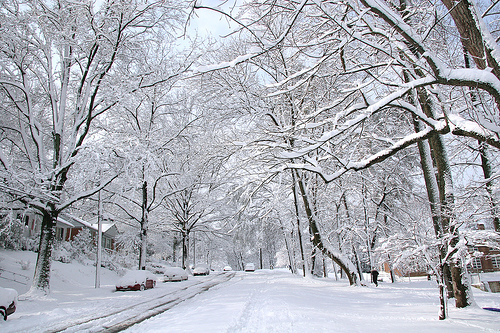
My enthusiasm for the snow has decreased considerably since the last time I blogged. It's still beautiful, but unless I'm seeing it through a window in a warm, cosy room, it mostly just makes me grunt. And not in awe or appreciation. Is it possible that this winter is colder than the last?

Yes, the Niagara Falls have (kind of) frozen over
Source: http://www.usatoday.com/story/news/nation-now/2014/01/10/niagara-falls-freezing/4407261/

When I haven't been freezing, I've been panicking and regretting my rash decision to have my credit limit extended and to take six classes (plus a one-credit seminar). In this fit of panic, I resigned my one-credit seminar. Not only did that not help much, but now I'm regretting resigning it. First of all, most people do not ever resign a class, and I've resigned more than one in the three semesters I've been here; second, who in their right mind resigns a one-credit class? Apparently my little pigeon mind thought it could handle six 300-400 level classes, but that one, tiny, single-credit class pushed it over the edge. My mind is ever a mystery to me. At any rate, it's done now.

On a slightly more cheerful note, spring break is coming up soon, and I'm hoping that the weather will be at least a little more spring-like. Who the heck decided to name the coldest months in the year the 'spring semester' anyway? What a cruel sense of humour. Some people just want to watch others squirm.

On an entirely different note, am I the only one who feels that there is a surplus of attitude amongst my generation? I'm all for confidence and self-possession, but too much of it is almost worse than too little. Not only do (some) people think they know everything, but they have appalling manners. Does no one think it's important to teach basic courtesy anymore? I might be exaggerating (or not), but the trappings of the smartphone and internet seem to be inversely related to manners (or directly related to the lack thereof). Most people don't want to drag their eyes off the damn screen for long enough to say hi and wave at people they know. What's worse, sometimes they don't respond to a greeting or an acknowledgement. Is it really that hard to smile back at someone you recognize? Or even don't recognize, as 50% of the RAM space in your brain is currently occupied by pressing matters on facebook? Is smiling some kind of desperate move that shows you value human contact that you don't want to disperse freely? Whatever it is, it annoys the hell out of me. I understand that sometimes people don't feel like talking, but an acknowledgement or greeting really doesn't cost much. Plus, it doesn't hurt to have to do something you don't like every once in a while, especially when it's basic civility.

While we're on the subject of my fascinating and persnickety pet peeves, another huge one of mine (not so 'pet' actually) is when people believe that they can show their stress/frustration/poor life choices/ melodramatic life plot twists on other people. Not only is this incredibly spoilt and selfish, it also shows your lack of self-control and your inability to relieve stress healthily. Now, I'm not saying we should keep everything bottled up inside like repressed, 19th century British (i.e. Downton Abbey) characters, but you really only have the right (to some extent) to vent your frustration or stress on people you love and who love you and who will understand that you don't mean it. Apart from understanding, as important people in your life, they're obligated to occasionally tolerate your rubbish. Other people, however, are under no such obligation. Not only is it rude and unfair to show your stress on random friends/acquaintances/colleagues, it is extremely spoilt. Why? Well, because clearly nobody has told you growing up that you're a spoilt prick for throwing tantrums when things don't go your way.

I think I've used up my rant quota for the day, so I'm going to sign off now. Any pet peeves that you guys would like to share with me in the comments below, or on Facebook?

Saturday, 7 February 2015

Spring 2015!

It was good to be home, but it's good to be back.

Source: http://mediad.publicbroadcasting.net/p/michigan/files/201101/SamiFLICKR_0.jpg

This year I was more prepared for winter - warmer clothes (and more fashionable, courtesy my mom), better face covering methods (never mind that I go out looking like a bank robber - sometimes you can't even see my eyes, because they get all fogged up). I have, thus warmly robed, discovered a new fascination for snow. I love the way it sparkles at night and the way each snowflake is so uniquely, symmetrically perfect (I still can't totally believe in snowflakes; intricate pieces of art falling from the sky seems such an impossibility). Sometimes (when I'm not late, which is not often), I stop and catch snowflakes on the sleeve of my coat, so that I can look at them closely before they melt into nothingness. Seems to me a bit of a cruel joke that something so beautiful cannot be preserved in its original form. And then there's the colour. Colour? What colour, you say? You, my friend, have not seen snow. Not truly, anyway. It's brilliant, luminescent, the purest of white; until you've seen snow, you've not seen a white so gleaming, so intense. It might seem strange to describe a snowy landscape as colourful, but look closely at the snow, put your face close enough so you can see it sparkle, and it is iridescent, like hundreds of tiny prisms. The cold might be bitter, but the landscape glitters. There are few landscapes that can compare in beauty to a snow covered town. I think I'm falling in love.

I guess I should have titled this 'Ode to Snow.' At any rate, snow, like spring, can only be described so much until the writer and her prose sound maudlin and purple respectively.

I've had a great time so far, and I'm really looking forward to the rest of the semester. I have six classes, which is a bit much, but I like all of them and the professors, and couldn't bear to drop one. Now that the Add/Drop period (where you can add or drop classes for the semester) is past, I'm stuck, but I'm not too worried. My favourite class so far is Islam and Literature - I'm enjoying the readings and the discussions very much. Also, the professor, Walter Hakala, is very good and very nice. I also
have Criticism, which is also shaping up nicely.

Source: http://sintoniza.com.br/wp-content/uploads/2010/12/46550.jpg

One of our assigned books is Persepolis by Marjane Satrapi, the Iranian-born French graphic novelist and director. If you haven't read it, I highly recommend it. It is very well-written - insightful, touching and humorous. In fact, I missed a class because I didn't realize what time it was while I was reading it (always a good indicator of the quality of a book). I'm a TA this semester for Macroeconomic theory, which looks like it might be a lot of work, but I'm hoping that I can make it easier for the students than it was for me, and also that the professor writes me a really good recommendation. :) I'm also trying to be more involved in extracurricular activities this semester. I volunteer at an after-school program for refugee kids on Wednesdays (it's called ENERGY), I'm dancing with UB Zeal (a South Asian dance club) for UB's International Fiesta (a cultural dance competition at UB), I'm in UB Lit Club (we discuss books, movies and art), and I'm trying to start a club of my own (more on that if I succeed!). So I'm very busy (by my standards, at least), but loving it. As for how many of my non-academic activities I can keep up, only time will tell.

Oh, and a very belated Happy New Year! I can't believe it's already 2015. We're as close to 2030 now as we are to 2000.

Wednesday, 17 December 2014

On living in dark and terrible times

I took off for home extremely excited - I couldn't wait to see my family and be in my room again.

Then I came home and discovered that the world was exploding with news of Peshawar.

That we are capable, as a race, of such monstrous and atrocious acts feels incomprehensible... I used to think that we are "beings of Light." That deep down in all of us there is a spark of goodness and even greatness that is the essence of humanity. Now, I am tempted to agree with Golding - that we are barbaric and monstrous at heart, that we have a 'Beast' within, and that without the constraints of civilization we would tear each other apart - perhaps we are less 'civilized' than we think because we are tearing each other apart. And yet, I look inside myself and I see empathy and compassion. I am an ordinary human being, and if I have these qualities, so must everyone, or almost everyone else, right? But is it possible for individuals with empathy to turn into mass murderers who attack the innocent? What kind of circumstances or environment could possible turn anyone even remotely 'human' into the perpetrators of such acts? If 'humanity' is humaneness, then does it still exist in our society? If there are vestiges of humanity, how do we cling to the dying embers in a world that seems to be devolving into utter, howling madness?

God help us.

Thursday, 20 November 2014

Why do I wear a bindi?

Hello everybody,

I am sorry to report that I have fallen behind on NaNoWriMo (National Novel Writing Month). Very behind. I was getting along swimmingly until schoolwork caught up with me. Two exams in one week and I fell smack out of dreamworld and very firmly into this one. You might have heard that Buffalo is having some very heavy snow days, so I do have a chance to catch up now. The trouble is that I'm going to have to get back into the 'groove'. The 'mood'. You know, immerse myself back in the world of my novel until I can write in it convincingly again. I can't really catch up on NaNoWriMo anymore (seeing as I missed 12 days out of 30), but that was never really the point anyway. Now that I'm well on my way, I want to take it slow and just do my best. I don't intend to stop writing The Glass Slipper again, but I am going to go slower.

In the meanwhile, I interrupt this programming to bring you a cultural broadcast.

I wear a bindi - i.e. a little sticker-dot on my forehead that looks like this:
Disclaimer: This is not me. This is Deepika Padukone, a Bollywood actor.

Except that mine is usually even smaller, and I wear it with regular western clothes. And I'm nowhere near as good-looking, of course.

Since I grew up in a very cosmopolitan area in a large city, was educated in English-medium schools throughout my life, and belong to a relatively affluent urban class, this is a little unusual. Most of my friends don't wear a bindi unless there's a cultural or religious occasion they have to attend (sometimes not even then). So even in India, people asked me 'Why do you wear a bindi?' My answer was generally a simple 'I like wearing one' or 'I like how it looks on my face.' But since I've come to the US, the questions have increased  in frequency, and I try to give more sophisticated answers, because most of the time people here don't know what a bindi is or why (some) Indians wear it.

Do I know why we wear bindis? I know why I wear it. I have an idea of the religious/cultural significance, but that's really only partially the reason for me.

I didn't really grow up making sure I put a bindi on my face everyday. I did wear bindis, but it wasn't really something I felt a compulsion to do everyday or all the time. I started wearing bindis regularly in the 8th grade. As a confused, doubtful and angsty teenager, it was merely a desperate ploy to convince myself of a number of things: the world really is black-and-white; I am the same person I was two years ago; I believe wholeheartedly in religion and God; I love my country and its people; I understand and respect all the traditions I follow. It was a very personal thing - a display of pride in my culture and heritage, a pride and faith that I was trying to cultivate to replace the emptiness inside. I didn't really think that much about it; I was just trying to be religious in the best way I knew how, apart from praying. Everything was changing - I felt as if the ground was slipping away from under my feet - and my bindi was my foothold.

I have grown a lot - literally and figuratively - since then. As I have evolved, so has the meaning of my bindi, for me. In the past 5 or 6 years, putting on a bindi has become a habit for me. I don't really think about it anymore - I do it the same way I brush my teeth - automatically. But I do think about it, and sometimes I ask myself the question 'Why do I wear a bindi?'

There is of course the religious/cultural significance, which is why I originally began wearing it. 'Traditionally, the area between the eyebrows (where the bindi is placed) is said to be the sixth chakra, ajna, the seat of "concealed wisdom". The bindi is said to retain energy and strengthen concentration. The bindi also represents the third eye.' That explanation is a shameless cut-and-paste from Wikipedia. Do look up the rest of it, it's actually pretty interesting.

Then there is the significance it has taken on for me. As a student in the US, studying Economics and English, I sometimes feel torn between my passion and what is undoubtedly a good education, and the feeling that I'm moving further and further away from my Indian 'heritage.' Sometimes, when I'm reading Shakespeare, I feel ridiculous. Why on earth am I studying English literature when we have so much rich vernacular literature of our own that I should be exploring? Why am I not reading Kalidasa instead? Of course, even if I were to read Kalidasa, it would be in English, which would not be quite the same. Why don't I know Sanskrit? Why don't I know my 'mother tongue', Telugu, as well as I know English, for that matter? Is it not a rather sad thing that I'm far more comfortable with English?

I struggled a little before deciding that I wanted to major in English as well as Economics. Mostly because I wondered whether it was a pragmatic choice - but there was a tiny part of me that screamed 'traitor!' I eventually realized that it was foolish to deny my passion and love for language - even if it sometimes feels like the wrong language - just because I felt like I was becoming too 'Western'. What does that mean, anyway? And do the two (English/a 'western' education and my local heritage) have to be mutually exclusive?

My bindi is, for me, truth be told, a rather tenuous connection to home and all I associate with home. It is a way for me to feel rooted, and Indian. It is a proud declaration of who I am and how I am unique. I may be wearing jeans and a t-shirt, but I am not American. I like America, but I am not American. It is a way to assert the mish-mash of cultures, language and thought that make me who I am. I grew up on Austen and Rowling and Disney, but also on Carnatic music and Bharatnatyam and Bollywood. I am who I am, and I'm done being confused and ashamed. I'm allowed to love classical Indian music and dance and have an extensive knowledge of English literature at the same time. But of course, no one ever said I couldn't. I don't mind people seeing or even asking about my bindi, but I don't wear a bindi to prove something to other people. I wear it for me, for how comforting it feels to touch the dot on my forehead and be instantly reminded of home, and the colour and chaos that made me the colourful and chaotic person I am today. My bindi is a part of me now, and the pride that I was attempting to simulate all those years ago is very real today.

Monday, 22 September 2014

My Cousin Rachel by Daphne Du Maurier


I've never read Daphne du Maurier before. In fact, I've hardly ever read psychological/ Gothic thrillers before - with the exception of Jane Eyre (and Northanger Abbey, if you count a satire of the Gothic romance - it didn't work for me, because obviously you need to be familiar with what the author is satirizing). This is really not my cup of tea - I suppose I could occasionally read, even enjoy psychological thrillers, but the Gothic romance is not for me. It always, for me, conjures up images of howling wind and rain, and gloomy marshes (or moors). Not for me. I prefer to laugh.

My Cousin Rachel reminded me constantly of Jane Eyre. I read later that Jane Eyre and the Bröntes were a great influence on du Maurier - it certainly shows. The evocation of atmosphere, the friendless, dependent woman, the unequal romance (age and otherwise), all bring to mind Jane Eyre. But My Cousin Rachel is a very different book from Jane Eyre.

Others have said that du Maurier has a way with words. I was too engrossed to particularly notice, which means she certainly does. The brilliance of My Cousin Rachel is neither plot nor suspense - it is atmosphere, even more than character. In fact, I'd say the atmosphere was a character in itself, playing strongly in shaping the reader's feelings and mindset. The amazing ability to conjure up mood is what makes My Cousin Rachel more harrowing than the plot might suggest.

I would say that the plot is not extraordinary or very suspenseful. With the heavy doses of foreshadowing, and Ambrose's letters, it becomes rather obvious what has probably happened, and is happening. The narrator, Philip, is an orphan adopted by his older cousin Ambrose (he is also a stupid, obtuse dolt). Philip is Ambrose's heir. Ambrose, who suffers from bad health in the winter, travels to warmer climes every winter. This winter, he travels to Italy, where he meets the titular 'Cousin Rachel', who is constantly referred to as such, and is half-Italian. He enjoys her company, and, as you can probably guess, he falls in love with her and they marry. Rachel is the widow of Count Sangaletti, who, on his death left a large number of debts behind. She is quite impoverished when she meets, although not too impoverished to be able to reside in a large villa, in the best English fashion, where impoverished means that they live in a large house instead of a mansion, and employ only a few servants instead of an entire retinue. Anyway, the only one surprised (and unhappy) at the marriage is Philip, the poor dolt. The reason that I keep referring to him as such will become obvious as I progress.

Now, I did not start out hating Philip. He is sympathetic enough in the beginning. Even when he failed to foresee Ambrose and Rachel's marriage, I was still sympathetic. After all, we are sometimes most blind about those closest to us. I didn't even hate him when he is extremely jealous of Rachel, because it makes perfect sense for the orphaned, unsociable person with only one true friend and relative in all the world to be jealous of someone who could potentially take that one friend away. And of course, there is the new uncertainty about his rights, and whether he will still inherit the estate. Philip hates Rachel, and with good reason. This hatred grows stronger when Ambrose dies in Italy, before he can return home. Ambrose has sent home ambiguous, mysterious letters hinting at something dark and terrible. "She watches me constantly." - he writes in one letter. And in his last - "She has done for me at last, Rachel my torment." Now anyone with half a brain would infer that there is a high probability that Rachel either killed Ambrose or caused his death somehow. At this point, still possessing half a brain, this is exactly what he believes (actually not exactly - the character don't yet know that Ambrose is dead here, but Philip is extremely worried), despite the strong opposition and disapprobation of his godfather, who believe that these are the delusions of a sick man (they say he died of a brain tumour). On receipt of this letter, he leaves immediately to see Ambrose. I was still with him. Of course Rachel killed Ambrose. It seems obvious.

Where things start to change is when Rachel arrives at the estate. Almost overnight Philip's attitude towards Rachel changes. He throws caution to the winds and allows himself to like her. Even here things made sense. I was surprised myself at how likeable Rachel turned out to be. But of course, she cannot be a complete shrew if Ambrose fell in love with her. The genius of du Maurier here is that we are not shocked at Philips 180 degrees change in attitude, because we experience the same thing. I was conscious of wanting her to turn out to be completely innocent. du Maurier even succeeded in convincing me, along with Philip, that those letters truly were delusions.

SPOILERS ahead. Read at your own risk.

When, however, Philip, discovers further letters (and letter fragments) from Ambrose insinuating the same (and more) things about Rachel, I was bought back to Earth with a jolt. At around the halfway point of the book, Philip finds a coherent, logical, fully conscious letter from Ambrose explaining that Rachel is an extravagant spendthrift who does not seem to have quite the same moral outlook as they do. He writes that she is constantly with Rainaldi (an Italian who is Rachel's man of business), and they seem to have secrets from him. Oh, also, he thinks that he is being slowly poisoned by Rachel. Surely this is explicit enough to make anyone suspicious.

Not Philip, though. He buries the letter. He dismisses it out of hand. He denies it. You'd think the love and care and respect of decades of affection would outweigh a recent infatuation. Yes, Philip, who is twenty-four to Rachel's thirty-five, is totally besotted. He plans to make over the estate to Rachel when he turns twenty five, when it comes fully into his possession from his godfather. He plans to continue to reside on the estate as Rachel's man of business. Yes, he is that foolish and besotted. He continuously ignores every scrap of evidence that Rachel is not what she seems, as well as the good-natured, sound advice of his godfather and his daughter Louise, who is Philip's childhood friend. He grows angry at her when she talks sense. Again, you'd think long-term ties would outweigh short-term infatuations, but no. Not so, my friends. The world is a traitorous place. Expect a lifelong friend to choose the older, sophisticated vampire over you.

When Philip begins to show doltish signs, you hope he will snap out of it, because he was quite promising in the beginning. He even had a semblance of intelligence and sense. This hope is steadily defeated, with Philip's moronic-ness just growing with the passing of the pages. It is not just that Philip ignores caution about the woman he loves. That makes sense. It is that he outright ignores and defies strong evidence that Rachel is a manipulative witch who murdered Ambrose. Loyalty to the friend who bought him up with such affection and love does not trump infatuation, when it should. That is what made me hate him more than anything else. This betrayal of the father figure in his life, after his death.

My annoyance with Philip fought with my liking of du Maurier's writing and hampered my enjoyment of the book. I do not know if he was meant to be exceedingly unlikeable. I looked it up on Goodreads, and it looks like I'm not the only person who thought Philip was an ass. I do know that I spent a majority of the book wanting to hit Philip, or throw something at him. I'm lucky I was able to rein in these violent impulses, because my book is from the library.

Anyway, towards the end of the book, when Philip finally realizes that he cannot deny Rachel's villainy any longer (after he finds poison seeds in her belongings - she begins poisoning him as well, after he leaves the estate to her - that is what it takes), he still has Louise (his childhood friend) to rely on, despite his egregious mistreatment of her (I might have left him to suffer the consequences of his actions). Surprisingly, though, Philip, after discovering that Rachel is a murderess (although he cannot find concrete evidence), deliberately allows her to walk on what he knows is a dangerously unstable bridge, and she dies. This amounts to manslaughter. This surprising violent tendency actually makes an appearance earlier in the book, when Rachel refuses to marry Philip after leading him on, and his fingers close around her throat. That is the first indication that Philip is not quite a reliable narrator, and that he, also, might not be what he seems. Although (again from Goodreads) most people seem to believe that Rachel did murder Ambrose and was about to murder Philip (including me), the ending is supposed to be ambiguous. Philip himself is unsure about her guilt, and is therefore racked with guilt at his retribution. The question we are supposed to ask ourselves is: was Rachel guilty, or was she the victim of the suspicions of two jealous and possessive men?

I quite firmly believe that Rachel is guilty. However, when I think about Philip's unreliability as a narrator, I begin to feel a little doubtful. I would personally have preferred an ending where Philip took her to court after finding evidence that she is guilty. I would have liked to see the interaction between the two in a drawn out court battle, and I would have liked to see how Rachel changed. What would Philip's feelings be at having to accuse the only woman he ever loved of murder? At the end of the book, strangely enough, Philip still loves her in a twisted way, even having murdered her.

Part of what is amazing about this book, apart from the atmospheric detail, is how du Maurier changes our mind two, three times about Rachel. I was quite as firmly convinced as Philip at one point of her innocence. I liked Rachel. I wanted her to be innocent.

At the same time, while Rachel is the subject of the books, and of Philip's obsession, by the end, we still don't really know her. We don't know anything of her past, of how she was with Sangaletti, her first husband. We don't know how she became the way she was. We don't know who she is - murderess, or twisted victim of circumstances, or person with fatal flaw, like a Shakespearean protagonist. There are inconsistencies in her character - kindnesses, nice touches that don't fit in with what we know and believe. But then Captain Hook liked flowers and wanted a mother.

On the whole, I enjoyed reading My Cousin Rachel. When I was done, I thought that I hadn't really been frightened by it, or shaken by it. But I woke up three times yesterday night, and each time I was thinking about Rachel and Philip. Obviously I was more affected than I realized. A story that does not leave you is the mark of a master storyteller. While I still don't think that Gothic romances are my cup of tea, I do want to read more of du Maurier, particularly her famous Rebecca.

I read My Cousin Rachel for an online book club at https://theoldfashionedgirls.squarespace.com/ and https://theoldfashionedgirls.squarespace.com/the-ofg-book-club/2014/9/14/my-cousin-rachel-the-first-half.
Do check it out.